Physical Address
304 North Cardinal St.
Dorchester Center, MA 02124
Physical Address
304 North Cardinal St.
Dorchester Center, MA 02124

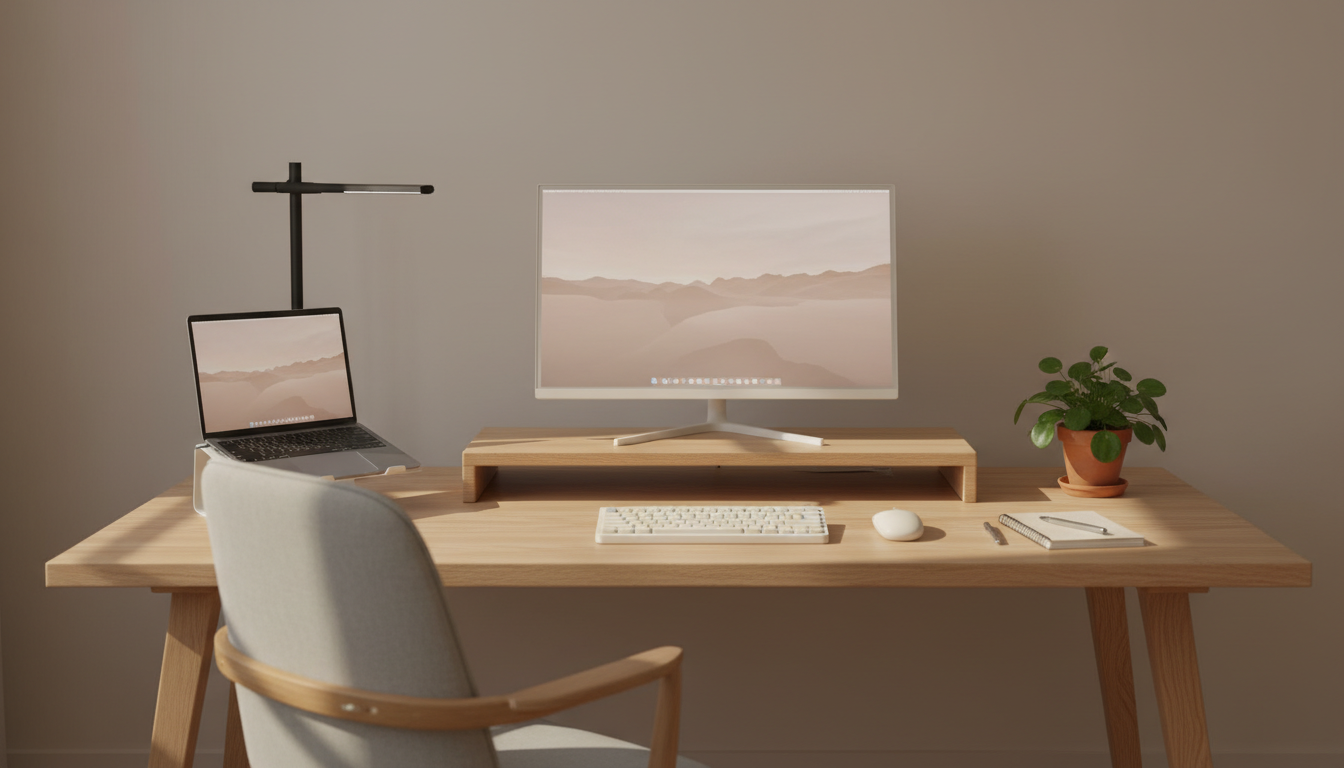
Craving a clutter-free study desk setup that boosts focus and looks chic? This guide shows how to build a minimalist desk that turns even a small room desk into a productivity workspace and an aesthetic study space. Learn smart essentials: a monitor riser and laptop stand for perfect eye level, an ergonomic desk chair for posture, an LED desk lamp for eye-friendly lighting, and a cable management kit for crisp lines. Simple color palettes, hidden storage, and mindful accessories will elevate your routine, calm your mind, and keep every session intentional, efficient, and inspiring.
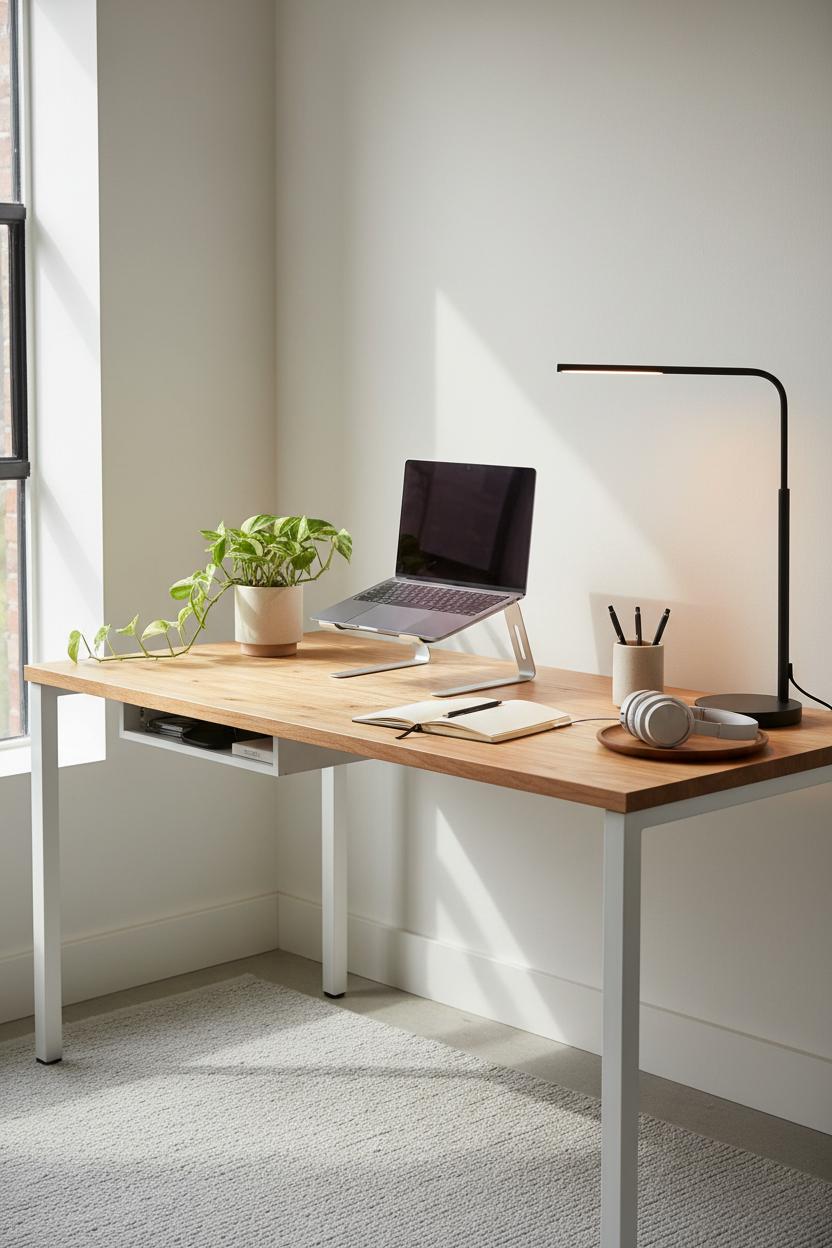
If you’ve ever sat down to study and felt instantly distracted by clutter, you already know why a minimalist desk feels so magical. Think of your study desk setup as a quiet backdrop that lets your brain switch into focus mode—clean lines, a calm palette, and only the tools that earn their place. A minimalist desk isn’t about living with less for the sake of it; it’s about curating an aesthetic study space that supports your goals, keeps visual noise low, and makes deep work feel inviting. Whether you’re carving out a small room desk in a corner or refreshing a larger productivity workspace, the aim is the same: create a scene that’s light, breathable, and beautifully intentional. Picture a soft-neutral surface, a single plant for life, warm wood tones, and a cup that keeps pens corralled instead of scattered—simple, but elevated.
Start with comfort and clarity. Choose an ergonomic desk chair that supports long sessions without stealing attention, then lift your screen to eye level with a slim monitor riser or a sleek laptop stand to protect your neck and open up precious surface area. Layer in lighting—a focused LED desk lamp for late nights plus natural light by day—to keep energy steady and shadows soft. Hide the tech tangle with a cable management kit so the only lines you see are the lovely ones in your space. The rest is mindful editing: a notebook you actually reach for, noise-canceling headphones within arm’s length, and a drawer or tray to reset the desk in seconds. When the essentials are dialed in, your productivity workspace becomes a gentle cue to begin, a place where concentration feels effortless and finishing an assignment comes with a little moment of pride. In the sections ahead, we’ll map out simple steps, budget-friendly picks, and styling ideas to help you build a setup that looks calm on Pinterest and works hard in real life—no extra clutter required.
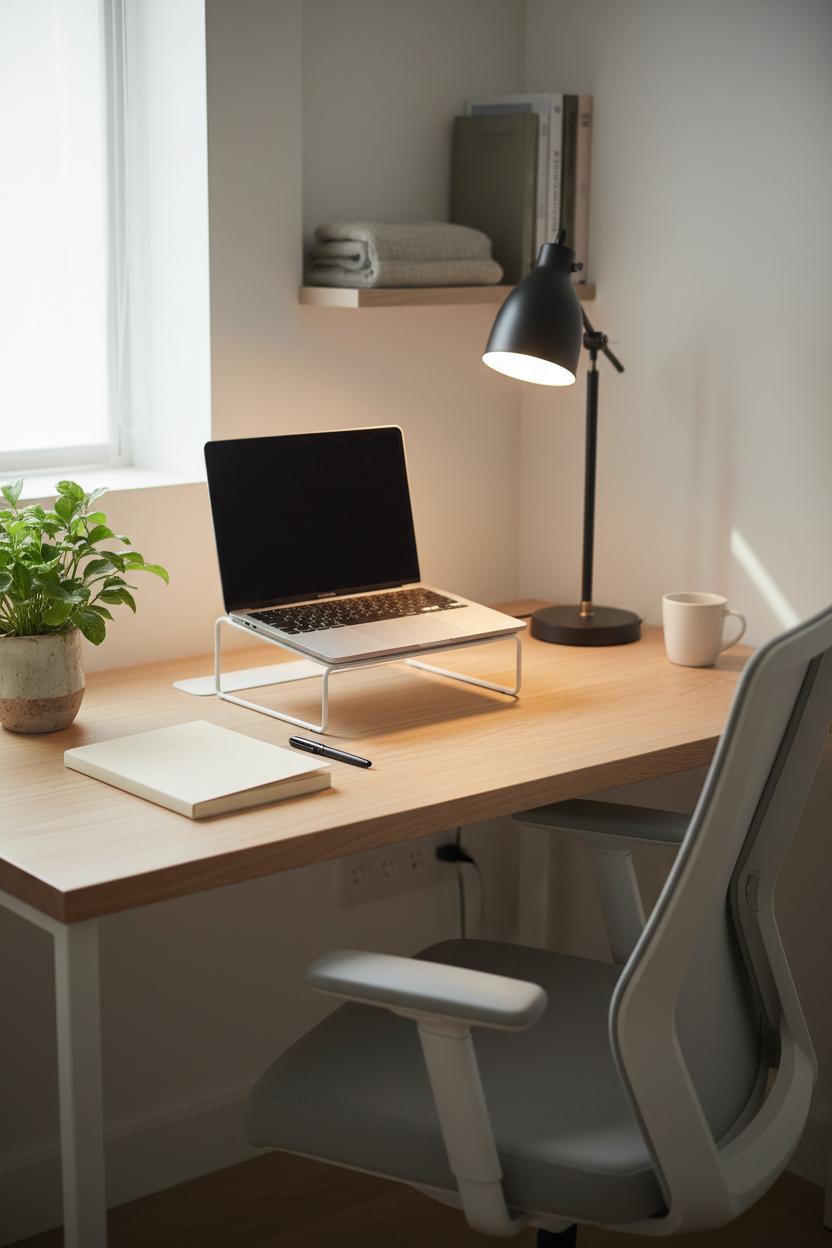
When you clear your desk, your brain exhales. White space isn’t empty; it’s visual quiet that lets your thoughts speak up. A minimalist desk trims away the “maybe later” piles and trinkets that nibble at your attention, so the few things that remain feel intentional and supportive. Think one beautiful notebook, your laptop elevated on a slim laptop stand or a low-profile monitor riser, and a warm, focused pool of light from an LED desk lamp. Tuck the chaos out of sight with a simple cable management kit so lines stay clean and cords don’t steal the spotlight. The result is a calm, breathable study desk setup that nudges you gently into flow because there’s nothing else competing for your focus—just a clear surface and a clear direction.
Minimalism isn’t about having less; it’s about giving more power to what you keep. In a small room desk scenario, this becomes essential: every inch needs to work hard without feeling crowded. Choose an ergonomic desk chair that supports you without bulk, keep your surface palette soft and cohesive, and let texture—wood grain, a ceramic cup, a single leafy plant—add warmth without clutter. Your productivity workspace thrives on simple rituals: an end-of-day reset, a designated catchall drawer, and a “one in, one out” rule for tools. That’s how an aesthetic study space stays effortlessly tidy and inspiring. Minimalism makes your environment an ally; it removes friction so you can transition from coffee to deep work in a heartbeat. Whether you’re studying in a dorm nook or carving out a corner at home, curating fewer, better pieces creates a desk that feels like an invitation. You sit down, and your mind knows exactly what to do.
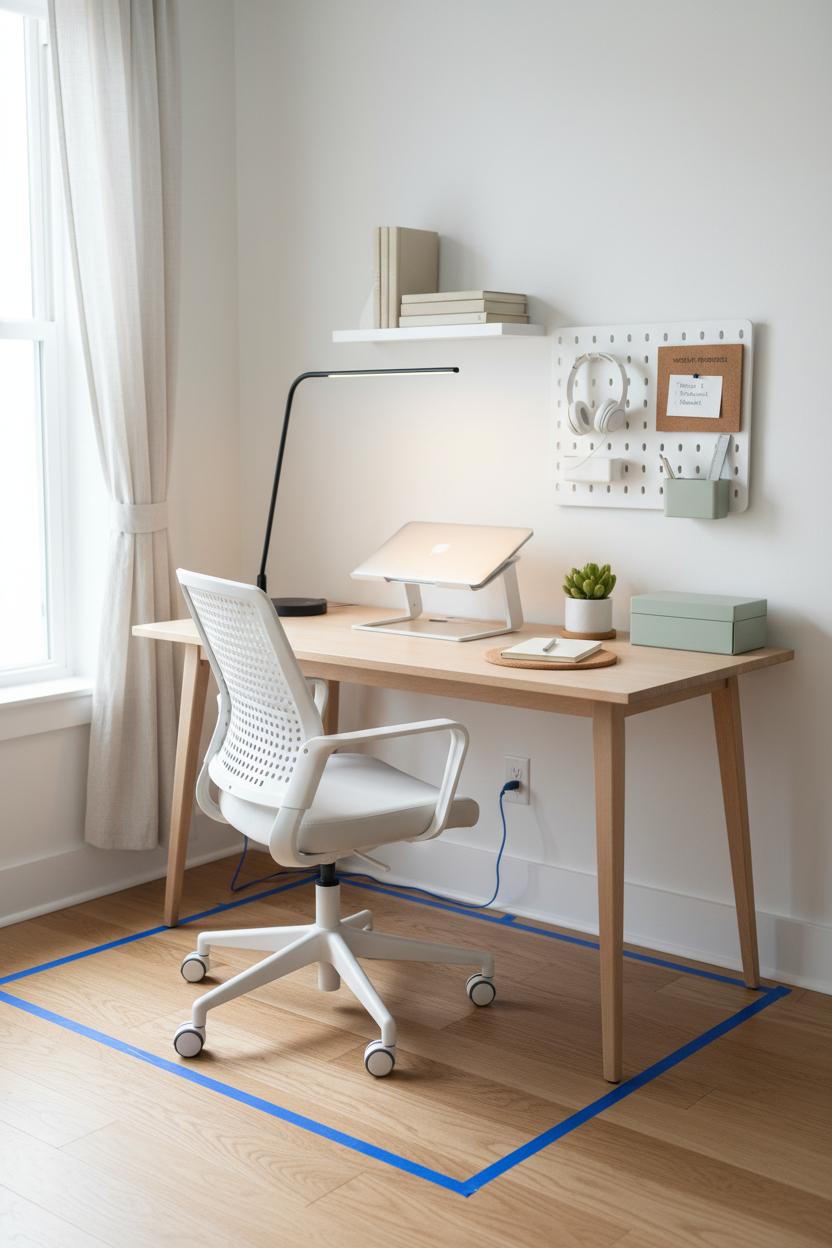
Before you buy a single piece, grab a tape measure and map the room like a tiny floor plan. Note where doors swing, windows sit, and outlets live. Use painter’s tape to outline the footprint of your small room desk and the “chair zone” behind it; you’ll want about 24–30 inches of glide space so your ergonomic desk chair moves freely without scraping walls. For a compact study desk setup, a desk depth around 20–24 inches keeps reach comfortable, while 40–48 inches in width typically leaves room for a lamp and notebook without swallowing the room. Stand where you plan to sit and look toward the light source—natural light from the side is ideal—and check that cables can reach an outlet without draping across pathways. If you’ll be working with a laptop, sketch in space for a laptop stand or a monitor riser so screens land at eye level and your neck thanks you.
Think in layers rather than clutter. A minimalist desk with clean lines becomes the calm anchor, while vertical solutions do the heavy lifting: a narrow wall shelf for books, a peg rail for headphones, maybe a slim pinboard for weekly priorities. Keep the desktop clear to preserve that aesthetic study space vibe, then add only what supports focus: a soft-glow LED desk lamp placed on the opposite side of your writing hand to prevent shadows, a coaster, a small plant for freshness. If you split tasks between reading and typing, zone the surface—keyboard and mouse centered, notebook off to the non-dominant side—so your productivity workspace flows naturally. Tape out the footprint of accessories first to ensure your elbows have room and cords won’t tangle.
Finally, plan for comfort and tidy lines. Measure from seat to tabletop to confirm that your ergonomic desk chair fits under the desk without bumping armrests, and leave breathing room for your legs—no bulky drawers where knees should go. Route wires along the back edge and down a leg using a cable management kit; it’s a small detail that keeps your minimalist desk feeling serene. Choose a soft, cohesive palette and repeat it in your storage bins and tools, and let one sculptural piece—perhaps the lamp—add character. When every inch is measured and intentional, even the tiniest corner becomes a focused, beautiful productivity nook.
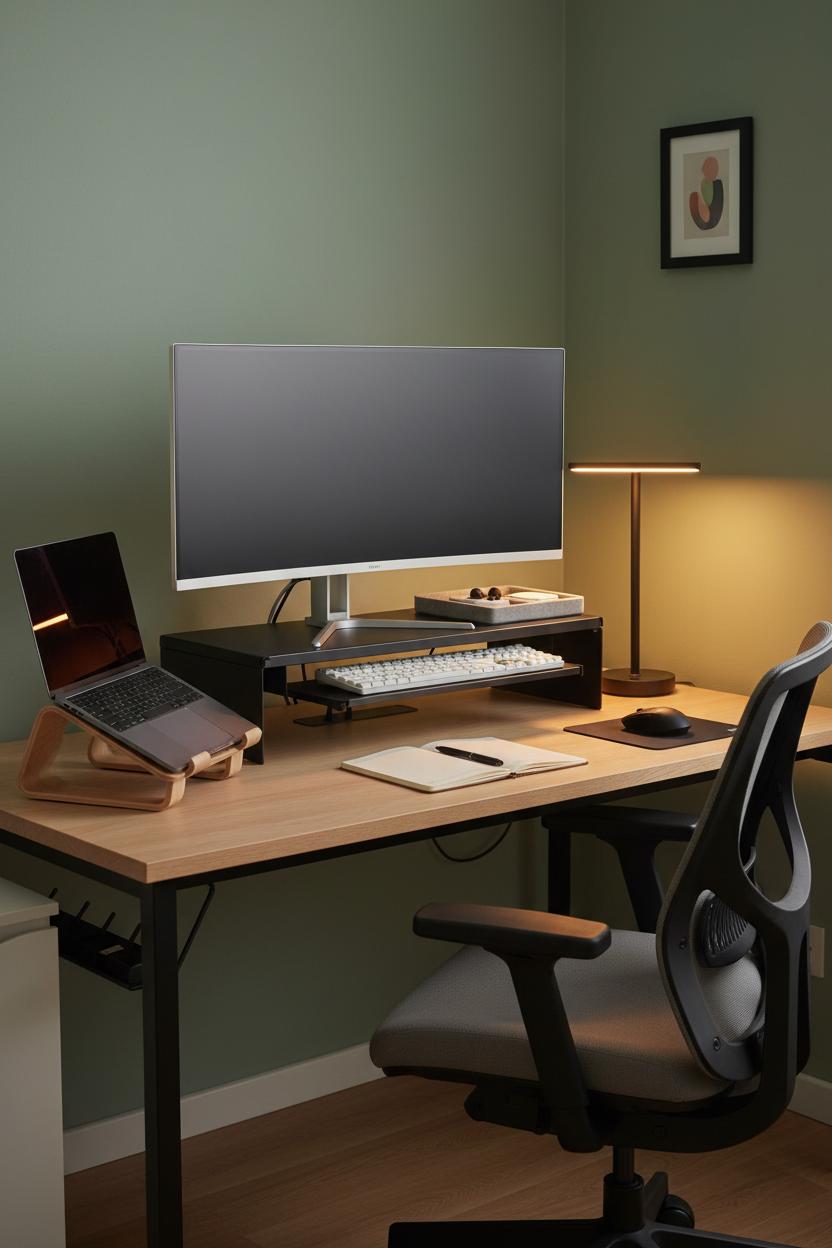
Raise your screen, save your neck. The simplest upgrade to a minimalist desk is pairing a slim monitor riser with a sturdy laptop stand so your eyeline meets the top third of the display. Suddenly your shoulders soften, your chin lifts, and your wrists find a neutral perch on the keyboard instead of hovering in midair. If you’re working from a small room desk, this combo is especially helpful—stacking vertical space makes your study desk setup feel airy, not crowded. I like a clean wood or matte metal riser that visually anchors the monitor while hiding a slim keyboard underneath when not in use. The laptop sits beside it on an angled stand, ready for notes, calls, or secondary screens without the hunched-over posture that sneaks in. Add an ergonomic desk chair set so hips and knees are at roughly 90 degrees, and you’ve got a calm, ergonomic foundation that still reads as an aesthetic study space rather than an office cubicle.
Keep the lighting gentle and purposeful. An LED desk lamp with a warm, dimmable glow keeps the vibe soft while reducing eye strain, and its small footprint maintains that minimalist desk calm. Tuck stray cords through a cable management kit along the underside of the desk or the back of the riser; when cables disappear, your mind follows suit, freeing up attention for deep work in your productivity workspace. External keyboard and mouse (wired or wireless) complete the posture-friendly setup—hands shoulder-width apart, elbows relaxed, screen right where your gaze naturally falls. If you share the desk with hobbies, slide accessories into a shallow tray under the riser to reset the space in seconds. The goal is a layout that invites you to sit down and start, no friction—just clear surfaces, aligned screens, and tools within reach. A few mindful habits seal the deal: nudge the laptop stand so its top edge matches the monitor height, step back every hour, and let the lamp’s warm pool become your cue to focus. Simple changes, beautiful rhythm, better posture.
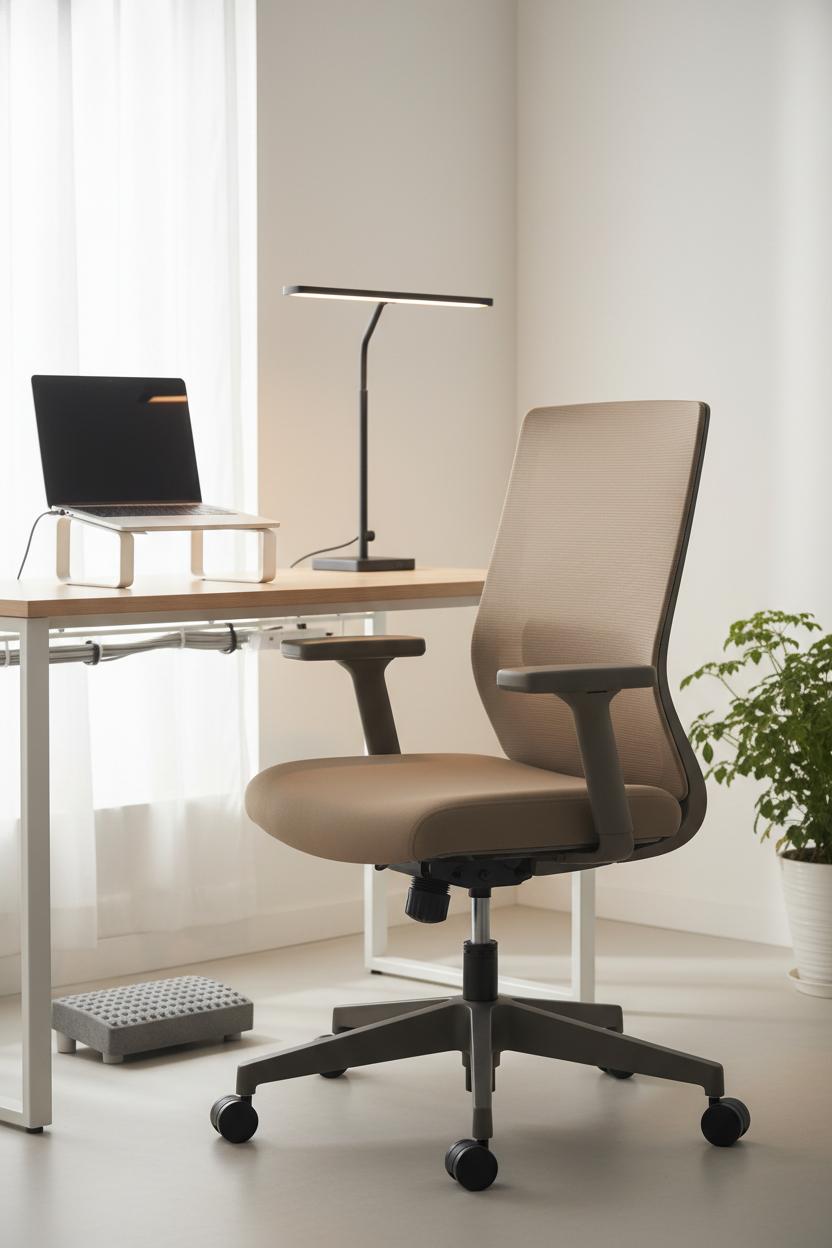
Think of your chair as the quiet foundation of your study desk setup—the piece that supports every deep-focus session and late-night burst of creativity. An ergonomic desk chair doesn’t have to break the minimalist spell; look for clean lines, breathable mesh or soft, matte upholstery, and a silhouette that tucks neatly under a minimalist desk. The magic is in adjustability: a seat that rises to keep your knees at roughly 90 degrees, lumbar support that meets the curve of your lower back, and arms that glide down or in, so they slide under the tabletop and save floor space. For a small room desk, choose a slim profile with a low, stable base and smooth casters, so it glides without dominating the room. Think soft neutrals, quiet black, or warm taupe—tones that visually lighten the footprint and blend into an aesthetic study space without pulling attention from your work.
Comfort is a system, and your chair works best when everything around it supports healthy posture. Keep your gaze neutral with a monitor riser or a laptop stand so you’re not craning forward. Pair that with a gentle recline and a responsive tilt tension you can lean into during long reads or brainstorming. If your feet don’t rest flat, add a small footrest to keep your hips open and circulation happy. An LED desk lamp angled away from your eyes reduces strain, while a simple cable management kit keeps wires from tangling at your feet and snagging your rhythm. The result is a calm, cohesive productivity workspace: you sit down, your body settles, your tools meet you at just the right height, and your mind is free to focus. Choose once, choose thoughtfully, and let your chair quietly carry the weight—so your energy can go where it matters most.
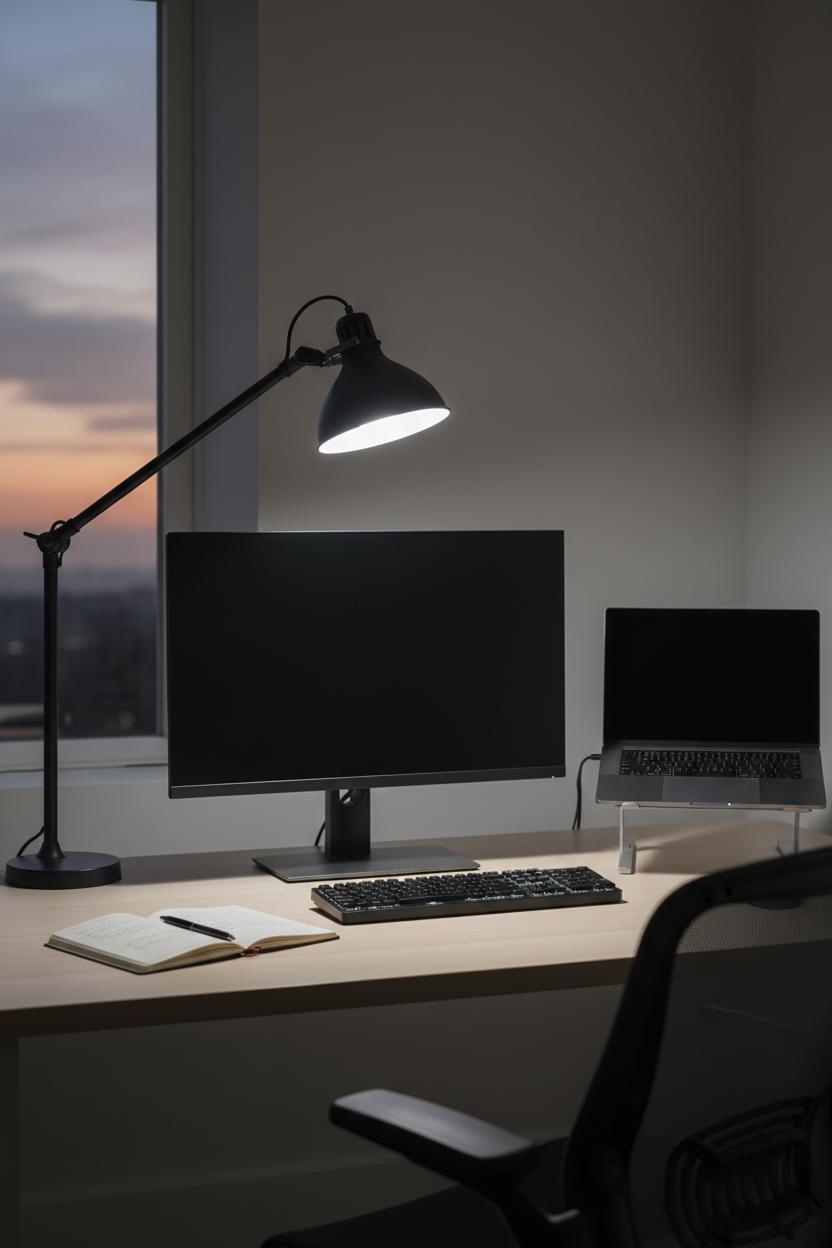
Think of your LED desk lamp as a quiet guide, not a spotlight. You want a pool of light that gently stretches across your notebook and keyboard, never blinding you or bouncing off screens. Place the lamp on the opposite side of your dominant hand so your writing doesn’t cast shadows—right-handers, lamp on the left; left-handers, lamp on the right. Angle the head at roughly 30–45 degrees so the beam grazes the desk instead of pointing straight at your eyes, and keep the top of the shade just below eye level. On a minimalist desk, an adjustable arm and swivel head are your best friends; they let you fine-tune the beam for deep-focus tasks, then soften it for evening wind-downs without adding visual clutter to your aesthetic study space.
Screens are where glare loves to play. Aim the lamp so it illuminates the surface in front of your monitor or laptop, not the screen itself. If you use a monitor riser, scoot the lamp slightly to the side and angle it so the light lands on the keys and notes, leaving the display clear of hot spots. A laptop stand can help, too—it lifts the screen out of the beam and opens room below for a soft wash of light. For a small room desk, a clamp-style lamp keeps precious inches free while still delivering precise placement. Choose a neutral-white color temperature (around 4000–5000K) to stay alert during focus blocks; dim it or shift warmer after sunset to cue your brain toward rest. Keep the cord trail invisible with a simple cable management kit so the whole scene feels calm and intentional.
Test your setup by moving your head and watching for reflections—if you can see the lamp in the glass, nudge the angle until it disappears. Try bouncing a touch of light off a pale wall for a halo of ambient glow, then dial the beam back onto your task for a productivity workspace that feels like a gentle spotlight on what matters. Pair it all with an ergonomic desk chair so posture and light work together. When your study desk setup is lit with care, you’ll notice it: fewer squints, longer focus, and a space that quietly invites you back, day after day.
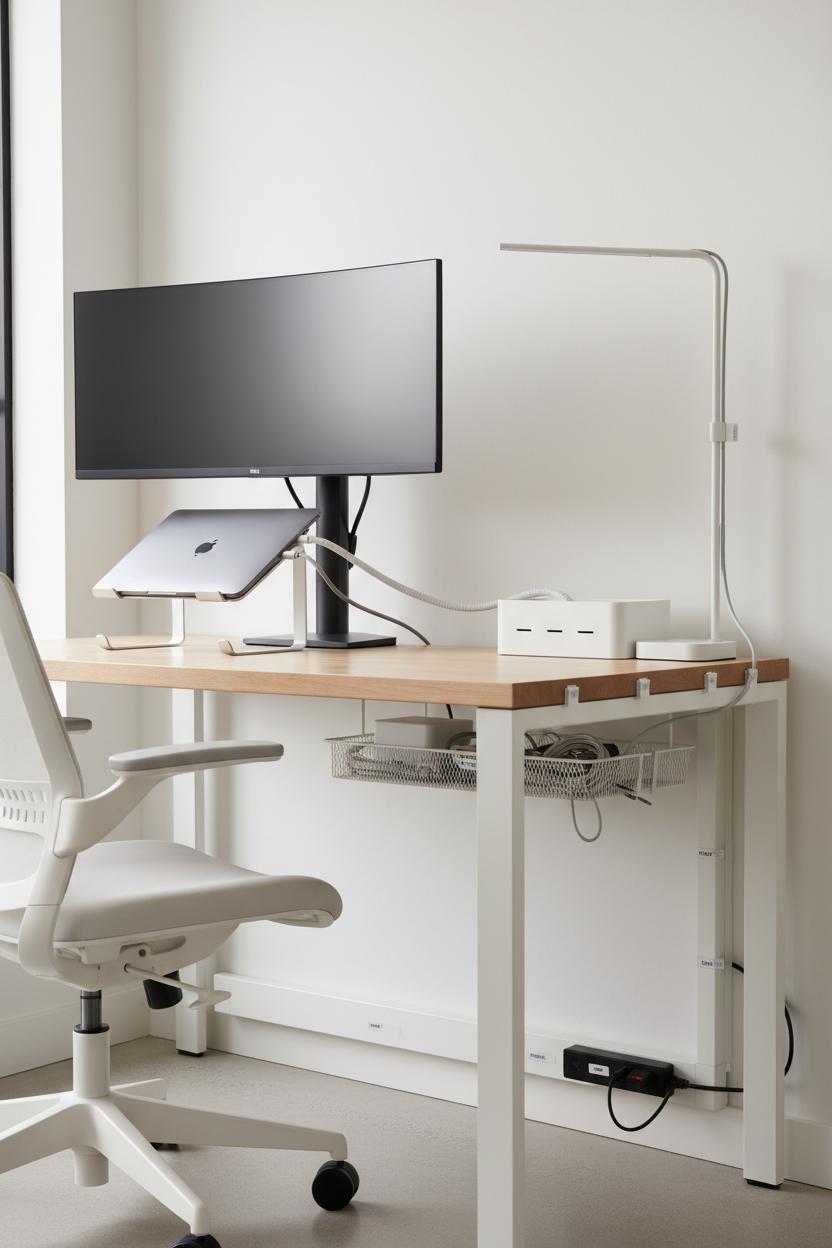
Cords have a sneaky way of stealing the spotlight, and nothing interrupts a minimalist desk faster than a tangle of black spaghetti. This is where a simple cable management kit becomes your best friend. Think of it as a tiny toolbox for serenity: adhesive clips, cord sleeves, Velcro wraps, and an under-desk tray. Start at the wall and work inward. Mount a slim surge protector beneath the desktop, feed just one visible cord down a discreet raceway along the leg or baseboard, and label each plug so future swaps don’t unravel your calm. If you’re working with a small room desk, this strategy instantly frees visual space, making the whole study desk setup feel lighter and more intentional.
On the surface, group devices by pathway. Thread your monitor, laptop charger, and LED desk lamp cords through a shared sleeve that drops behind a monitor riser or laptop stand, then clip the sleeve to the underside so it disappears from sight. Use low-profile cable clips to guide the lamp cord along the back edge instead of across the top. A shallow cable box or tray hides chunky adapters while leaving ventilation breathing room. Give every cable a little relief loop so nothing is under tension—tidy doesn’t have to mean rigid. The result is an aesthetic study space that looks styled but not staged, and that encourages deep focus the moment you sit down.
Don’t forget the under-desk zone, where wires love to catch on your feet or wheels. Tuck slack high and away from where your ergonomic desk chair rolls so your posture stays free and your productivity workspace feels calm and uncluttered. Color-match wraps to your desk tone for that Pinterest-level finish, and keep a couple of spare ties in a drawer for new tech that wanders in. A weekly two-minute “cord reset” keeps everything in line with minimal effort. When the visual noise disappears, your mind follows—your minimalist desk reads as intentional, your small space feels bigger, and your workflow gets smoother. It’s a tiny shift with a huge payoff: clean lines, quiet surfaces, and a desk that looks ready for anything.
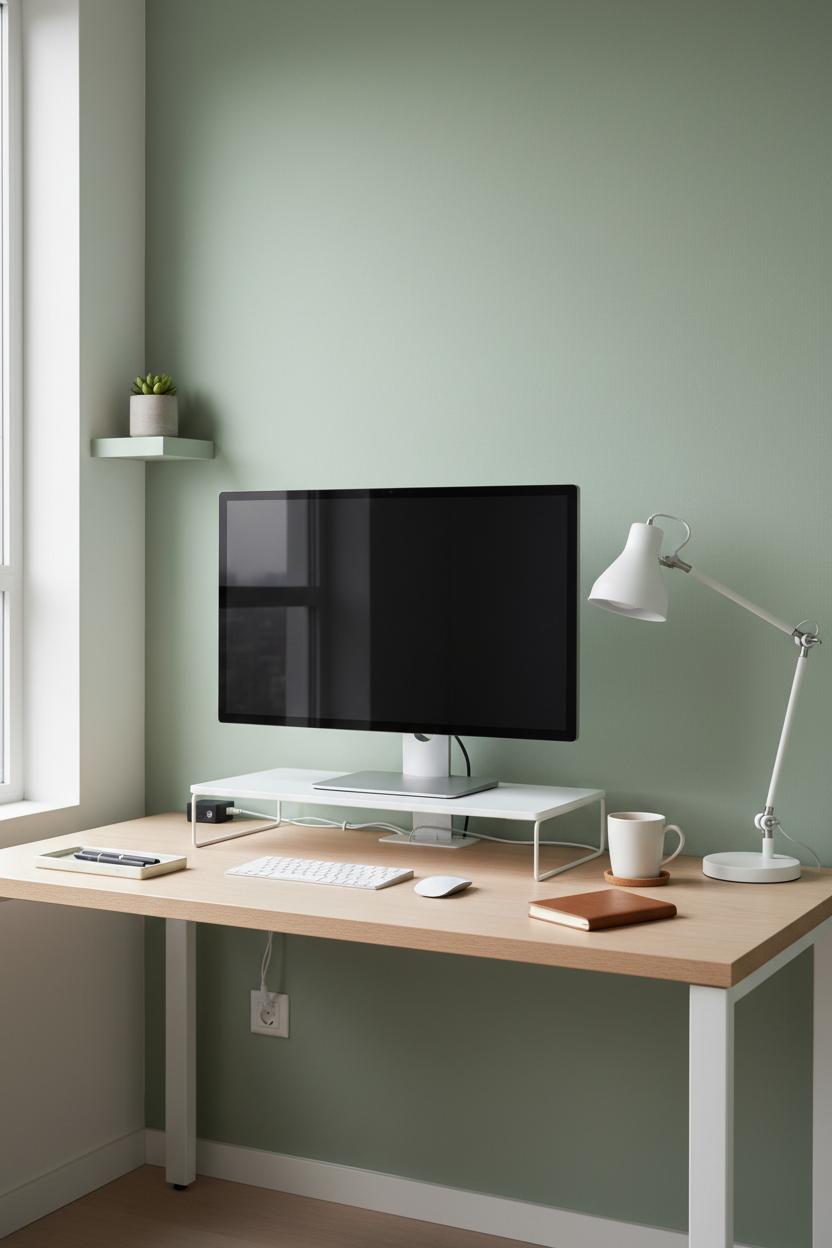
Start simple with a Single Screen recipe. Center a 24–27 inch display on a slim monitor riser so the top of the screen meets your eye line, then slide your keyboard and mouse beneath when you’re journaling or sketching. Keep the surface clean: a small tray for pens, a coaster, and your notebook. Angle an LED desk lamp at roughly two o’clock to wash the desk in soft, shadow‑free light. Tuck a cable management kit along the back edge and under the desk so cords disappear; it’s amazing how quickly visual noise drops and your study desk setup feels calm. This layout shines on a small room desk because it’s compact, balanced, and leaves breathing room for ideas.
For a Dual Display layout, aim for symmetry that still feels airy. If you use a monitor plus laptop, center the monitor and place the laptop on a slim laptop stand to the side so both screens sit at the same height. Prefer twin monitors? Keep them on matching risers with a tiny gap in the middle for your favorite candle or a little plant. Your keyboard and trackpad sit centered; a notepad lives to the non‑dominant side for quick capture. This becomes a true productivity workspace for research, coding, or design—one screen for deep work, the other for reference or timelines. Layer in a warm‑tone LED desk lamp to soften the tech and remember the cables: a simple cable management kit along the underside maintains that minimalist desk elegance.
If you’re all about lightness, the Laptop‑Only setup is your ultra‑portable, minimalist dream. Elevate the laptop with a low‑profile laptop stand to open up airflow and posture, then use a compact wireless keyboard you can tuck away between sessions. A clamp‑style LED desk lamp frees surface space, while a supportive ergonomic desk chair protects your back during long bursts. Keep accessories intentional—a single ceramic cup for pens, a slim timer, maybe a sprig of green—to turn the scene into an aesthetic study space rather than visual clutter. This approach thrives in a small room desk scenario: fast to reset, easy to keep tidy, endlessly soothing. Choose the recipe that matches your flow, then edit until what’s left feels effortless.
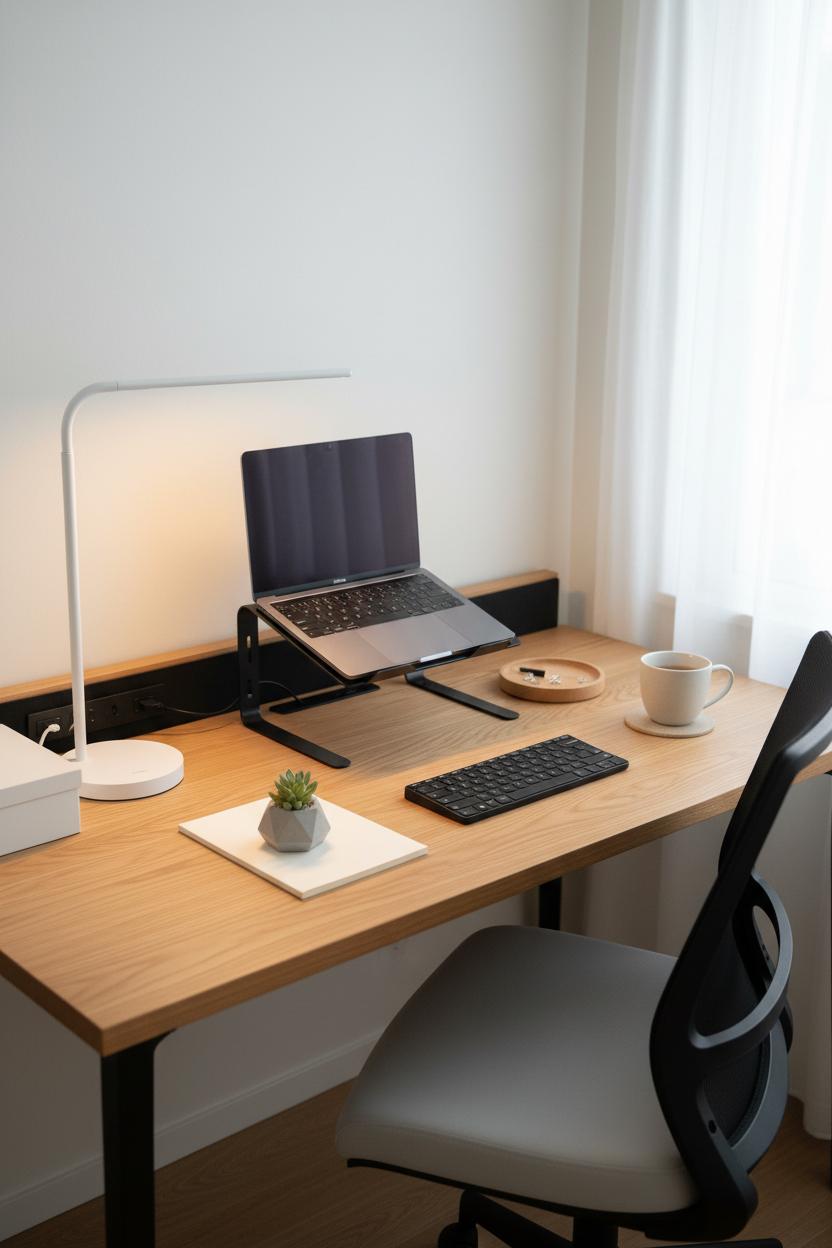
When it comes to a minimalist desk, the best accessories are the ones that quietly earn their keep. Think of your study desk setup as a calm landing strip for your day: clear, intentional, and softly styled so you can get right to work. Instead of piling on decor, choose a few purposeful pieces that shape an aesthetic study space—items that lift, light, and streamline without stealing focus. The goal is to pare back visual noise so your ideas feel bigger than the objects around them.
Start by elevating your tech. A simple monitor riser or a slim laptop stand creates breathing room on the surface while bringing your screen to eye level—instant posture upgrade, plus space underneath for a notebook or wireless keyboard. Pair that with an ergonomic desk chair that supports your spine without bulky lines, and suddenly your productivity workspace feels thoughtfully designed instead of improvised. For lighting, a low-profile LED desk lamp with adjustable warmth keeps eyes relaxed from morning to evening, and the small footprint keeps a small room desk feeling open. If cables are breaking the spell, a discreet cable management kit—think adhesive channels and a soft fabric sleeve—tidies the tangle along the back edge so the tabletop looks calm from every angle.
Finish with a few tactile touches that make focus feel inviting. A shallow wooden catchall for clips and a single pen, a neutral coaster for your tea, and a tiny plant or stone paperweight add texture without clutter. Keep color cues consistent—soft whites, matte black, or warm oak—for cohesion that reads clean on camera and even calmer in person. When storage is limited, a lidded box or slim drawer insert can hide extras between sessions, so your desk resets in seconds. These minimal add-ons don’t shout for attention; they simply support the way you move, see, and think. With each piece pulling its weight, your aesthetic study space stays light, your small room desk stays spacious, and your mind has the quiet it needs to do beautiful work.
That’s your gentle nudge to create a calm study desk setup: clear surfaces, curated tools, hidden storage, warm light, and a touch of green. Keep a minimalist desk that centers your mind, add ergonomic essentials, and let color stay soft and simple. Whether it’s a small room desk or a corner nook, design a productivity workspace that feels effortless. Style an aesthetic study space you’ll love returning to—quiet, cozy, and distraction-free. Brew something warm, sit tall, and let your ideas flow.