Physical Address
304 North Cardinal St.
Dorchester Center, MA 02124
Physical Address
304 North Cardinal St.
Dorchester Center, MA 02124

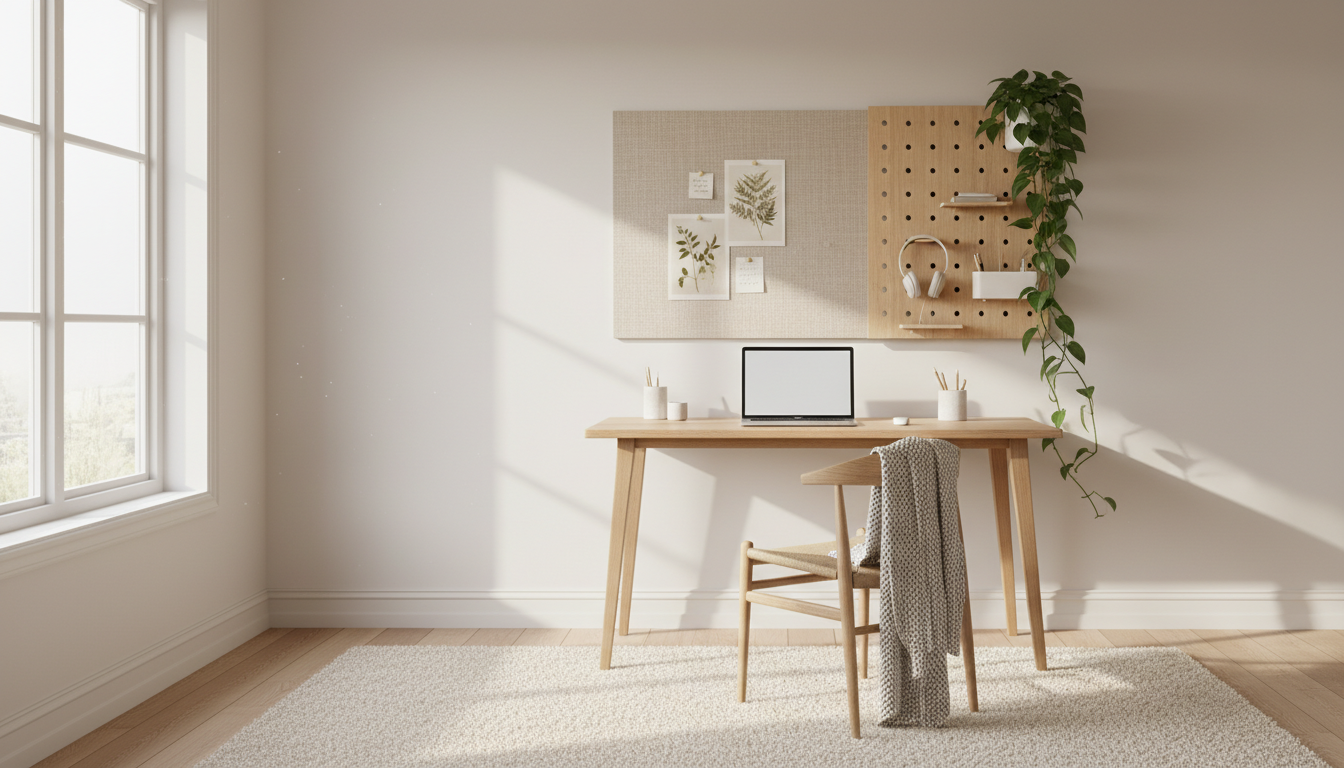
Ready to refresh your home office setup? These creative workspace ideas pair stylish desk decor with smart productivity tips to spark focus and flow—even in a small office design. Discover how a standing desk and ergonomic chair improve posture and energy, while a sleek desk organizer keeps essentials tidy. Try a pegboard wall to maximize vertical storage and showcase inspiration, and layer light with a focused task lamp for all-day clarity. Whether you’re carving out a cozy nook or upgrading your studio, this guide will help you build a workspace that looks beautiful and works brilliantly.
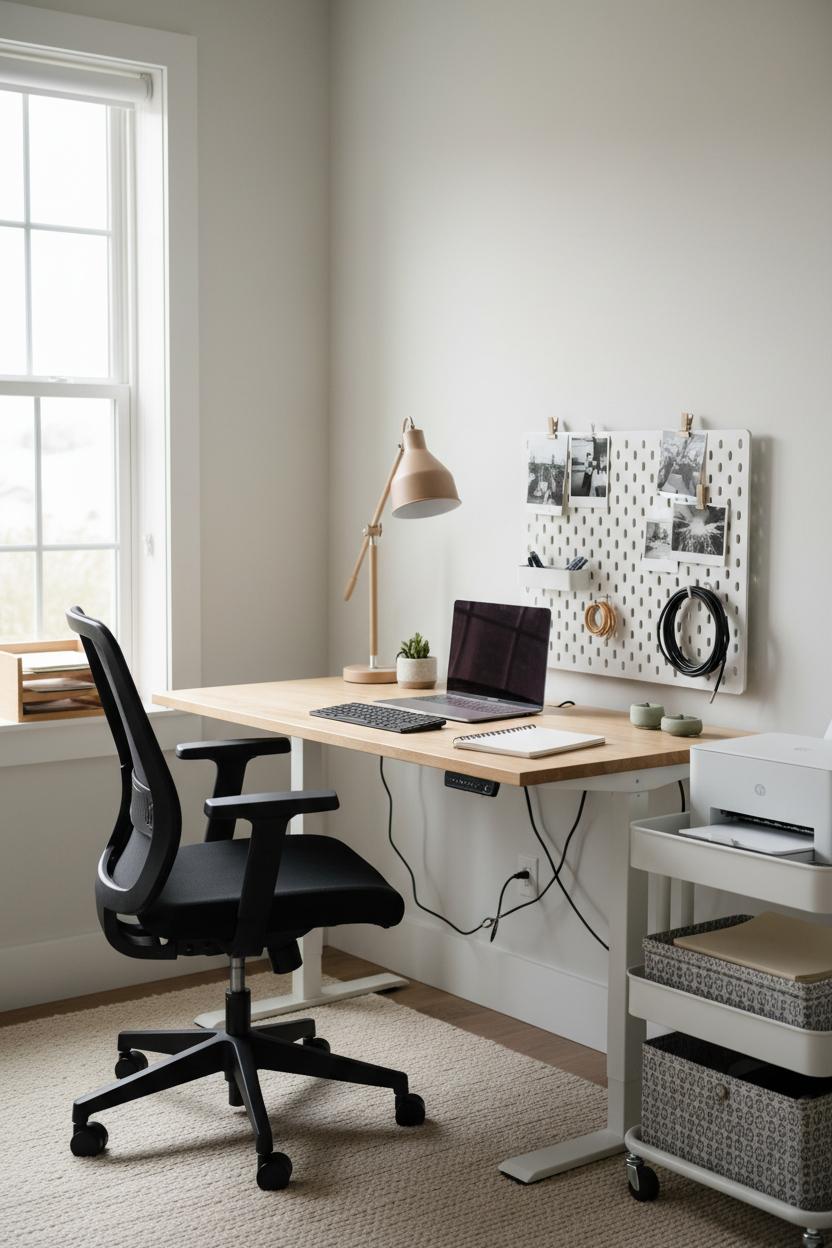
Start by shaping your home office setup around lines of sight and light. Face your desk toward a quiet wall or place it perpendicular to a window so daylight washes your workspace without pulling your attention outside. Keep a tight “command zone”: screen, keyboard, and notebook in a tidy triangle, with everything else nudged out of view. In small office design, this can be as simple as a shallow desktop against the wall with a slim console or rolling cart behind you for the printer and paper. Vertical storage is your best friend—install a pegboard wall to lift tools, cables, and inspiration clips off the surface, then add a minimal desk organizer so only daily essentials live within arm’s reach. Corral cords along the back edge and choose a muted palette for desk decor; when your eyes scan the room, fewer visual notes means fewer mental tabs open.
Build in movement and lighting cues that nudge you into focus. A standing desk paired with an ergonomic chair lets you switch positions without resetting your flow, and a softly directional task lamp creates a “cone of concentration” that visually separates work from the rest of the room. Layer a low-pile rug under the chair to mark the zone, and use a plant or screen to frame your field of vision if your space shares a living area. Keep decor intentional and repetitive—one texture for storage boxes, one accent color for accessories—so your brain isn’t constantly reprocessing stimulus. These creative workspace ideas aren’t about buying more; they’re about editing what’s in view so your energy goes into making, not managing.
Finish with gentle productivity tips that become habits: set a left-to-right flow for papers (inbox tray on the left, active work center, archive or shred on the right), give yourself a two-minute end-of-day reset to clear surfaces, and pre-stage tomorrow’s first task where your hands land. If you need inspiration on display, cluster it tightly on a single board rather than scattering it across the room. Whether you prefer a clean minimal desk or cozy layers of texture, the layout does the heavy lifting—less visual noise, more calm momentum.
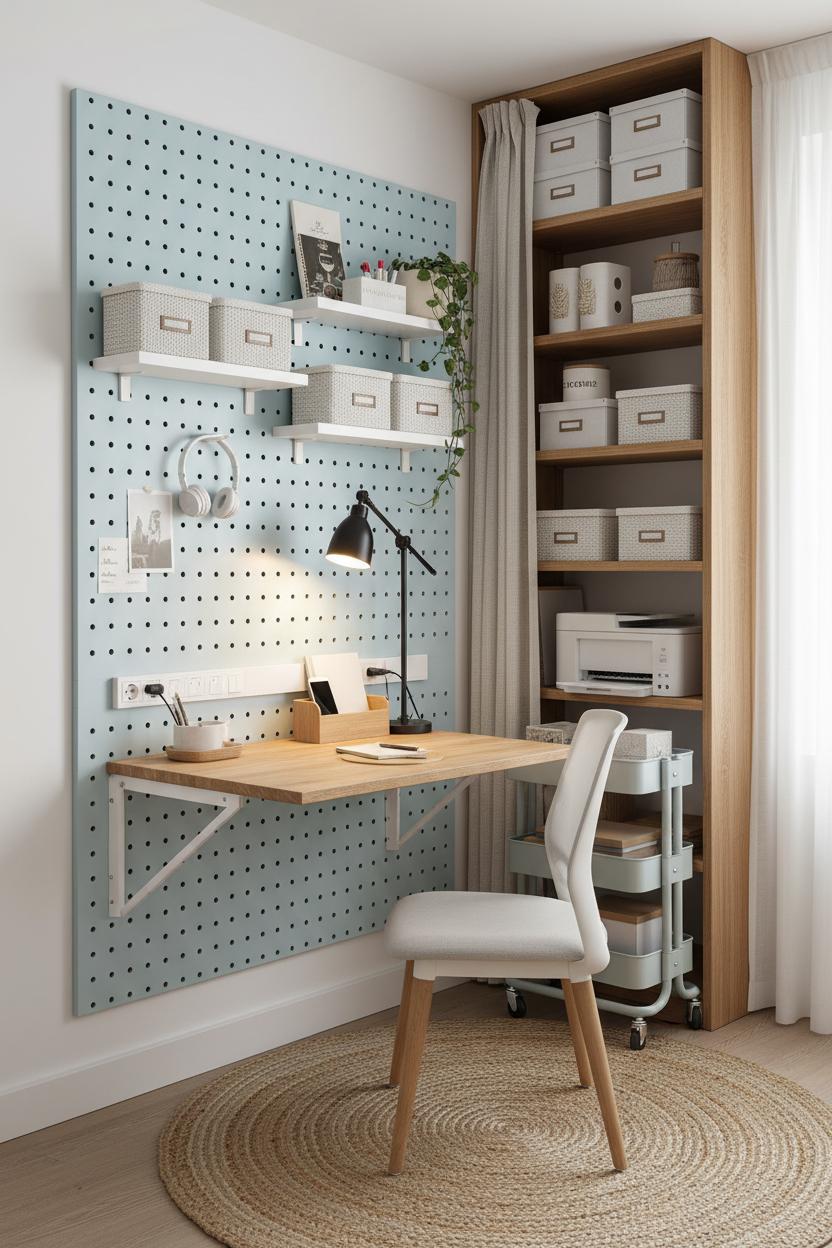
When space is tight and a room pulls double duty, think vertical, foldable, and portable. Wall space becomes your best friend: install a slim shelf rail or a pegboard wall to float supplies, clip inspiration, and keep the desktop blissfully open. Choose a narrow work surface that tucks into a corner or under a window, and let a petite task lamp wash the zone with focused light without overpowering the room. Cohesive bins and lidded boxes corral cables, markers, and notebooks so your desk decor looks intentional, not busy. In shared rooms, a rolling cart can moonlight as a mobile supply station—park it beside you for work, then wheel it away for family time. These creative workspace ideas hinge on a light footprint: fewer, smarter pieces that shift with your day and keep visual noise low.
For furniture, opt for a fold-down wall desk or a compact standing desk that raises when you need to move and lowers when someone else needs the floor. Pair it with a slim, breathable ergonomic chair that slides under the surface, freeing precious inches. Layer your lighting—ambient overhead plus a directed task lamp—to prevent eye strain and visually “frame” the zone. A simple desk organizer creates a daily landing pad for essentials, while cable clips along the back edge erase clutter in a single swipe. If you’re sharing, set gentle boundaries: a soft rug under the chair marks your footprint, a curtain or bookcase divider adds privacy, and a small tray signals “in use.” Build a five-minute shutdown routine—reset the surface, charge devices, tuck paperwork—that doubles as one of your favorite productivity tips for tomorrow’s fresh start.
Finish with airy hues and a few organic textures to keep a small office design calm and uplifting. Mirror a window with a glossy frame to bounce light, add one low-maintenance plant for life, and keep personal desk decor curated and meaningful. Monitor arms free space and improve posture, while a pegboard wall hook holds headphones between calls. However small your home office setup, a few well-edited choices turn a shared corner into a focused, beautiful place to create.
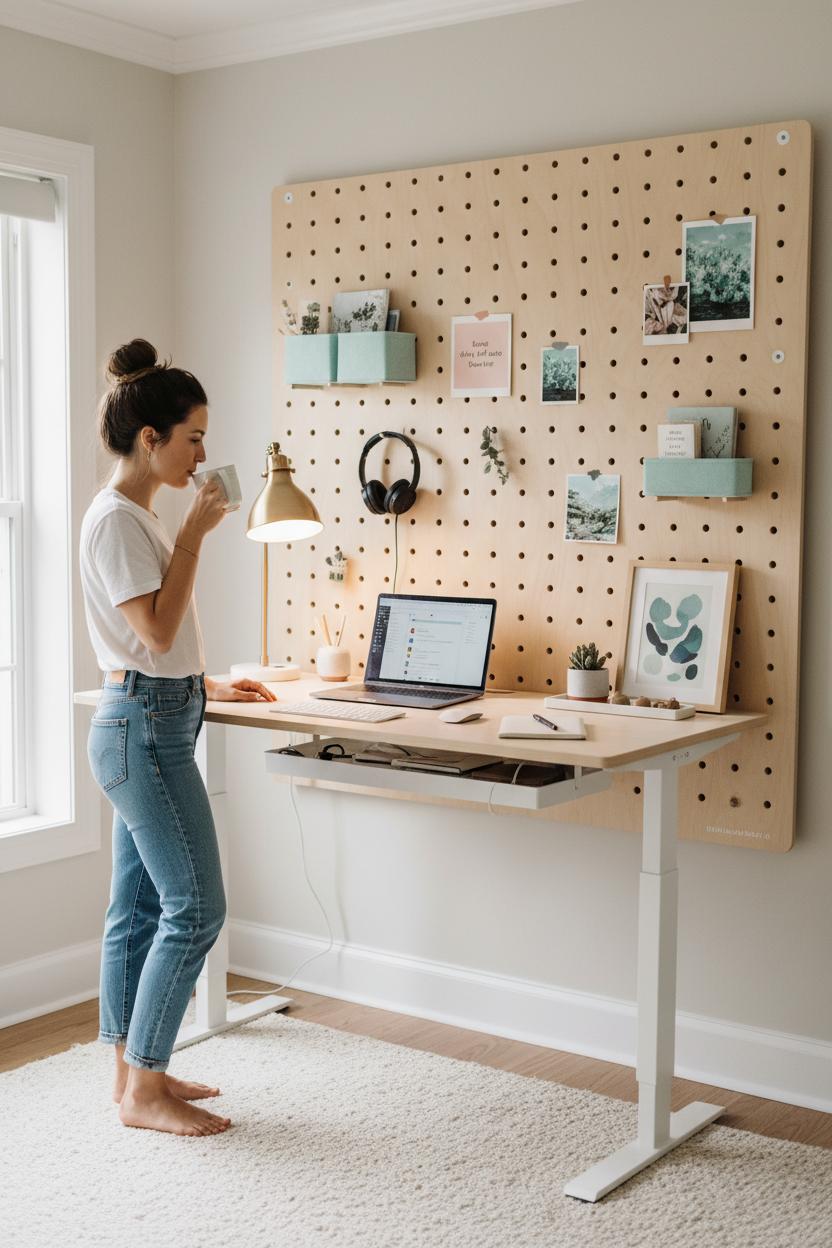
Imagine gliding from your morning coffee to your keyboard and, with one smooth lift, waking up your whole body. That’s the quiet magic of a standing desk: it invites movement, and movement invites momentum. When you stand, your posture opens, your breath deepens, and you feel just a bit more switched-on—perfect for those first ideas of the day or a mid-afternoon slump. Try pairing it with simple productivity tips like “stand to brainstorm, sit to refine.” Draft your big-picture thoughts on your feet, then lower the surface to polish them from your ergonomic chair. If you’re mapping out creative workspace ideas for a home office setup, an adjustable standing desk gives you the flexibility to match your energy—up for quick tasks, down for deep focus. Keep your monitor at eye level, shoulders relaxed, and wrists neutral; these tiny posture upgrades translate to fewer aches and a clearer mind so your best ideas have room to land.
Style it thoughtfully so the space feels as energizing as it functions. For small office design, use your vertical real estate with a pegboard wall where you can clip inspiration, hang headphones, and corral supplies in pretty bins. A slim desk organizer keeps cords tame and surfaces open, so you’re not visually weighed down. Layer in a warm task lamp to carve out a glow zone that signals “focus time,” then finish with desk decor that sparks joy—think a petite plant, a favorite print, or a tray for daily essentials. The goal isn’t perfection; it’s flow. With a few intentional choices and an adjustable rhythm between sitting and standing, your workspace becomes a gentle nudge toward momentum. Among all the creative workspace ideas you might try, a well-tuned standing desk setup may be the easiest shift with the biggest payoff: more energy, steadier focus, and a workday that feels a little lighter, brighter, and infinitely more you.
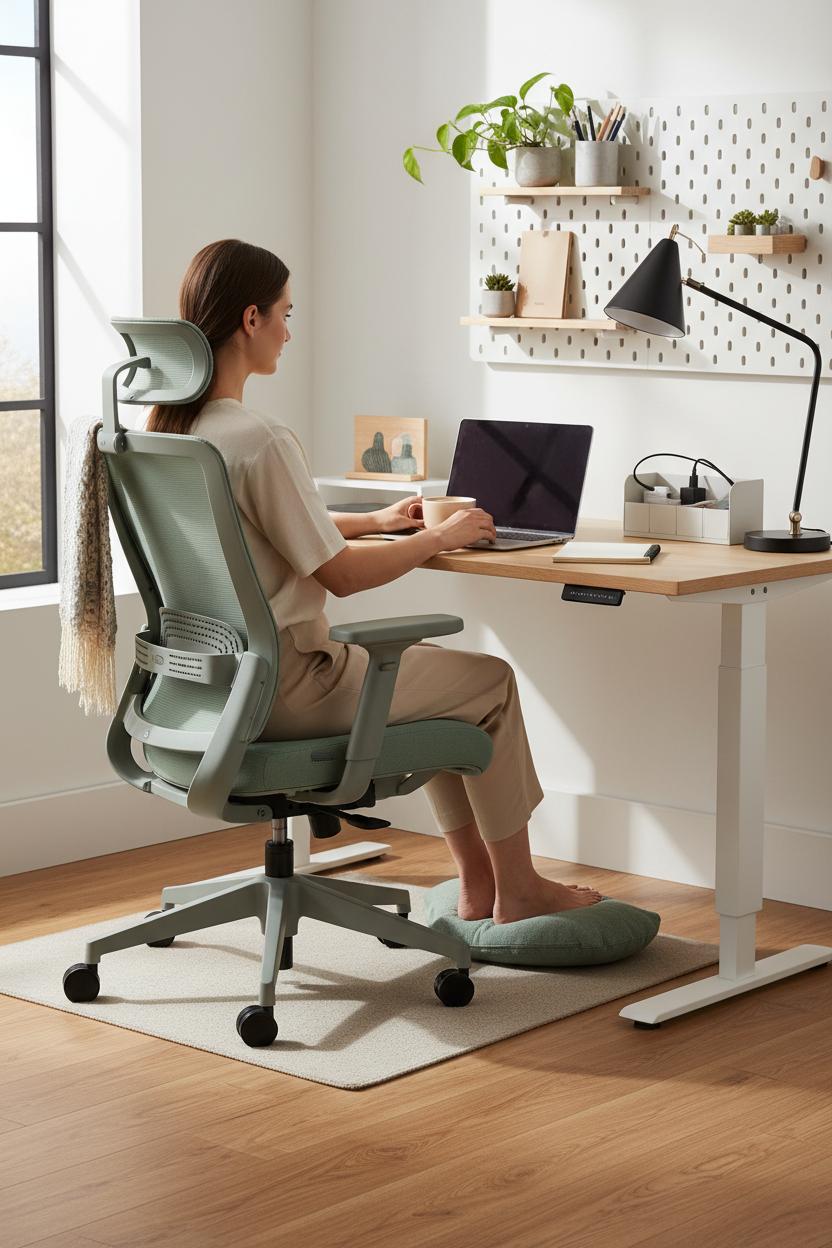
Think of your ergonomic chair as the quiet co-creator of your day—the piece that holds you up while your ideas do the roaming. When I’m sifting through creative workspace ideas, I always start here, because a supportive seat is the foundation of any cozy, high-functioning home office setup. Look for adjustability like it’s a love language: seat height that lets your feet rest flat, hips and knees at a soft 90; a waterfall edge so your legs don’t tingle; seat depth that leaves a two-finger gap behind the knees. Prioritize lumbar support that meets the natural curve of your back (and actually moves with you), plus armrests that glide up, down, and tucked-in to suit small office design and to slide under your desk. A smooth recline with adjustable tilt tension keeps micro-movements going—hello, circulation and focus. Mesh backs breathe beautifully in sunny rooms; plush foam or gentle contouring gives that cloudlike feel for long writing sessions. Headrest? Lovely for brainstorm pauses. And don’t forget the base: stable five-point wheels matched to your flooring make gliding feel effortless.
Pair your ergonomic chair with a standing desk to switch postures through the day, and you’ll feel energy last longer than your latte. Little details complete the experience: a supportive footrest if your legs dangle, a floor mat to protect pretty surfaces, and a task lamp that pools warm light where you need it most. Let your chair color play with your desk decor—think soft sage, oatmeal, or matte black—then echo it with a pegboard wall and a tidy desk organizer to corral cables and keep tools within reach. For practical productivity tips, set reminders to shift positions, try 50/10 focus sprints, and nudge the armrests and lumbar every few hours. Measure your seat height against your desk to avoid shoulder scrunching; consider armless or low-profile designs for ultra-compact corners. Test-drive if you can—thirty minutes tells you a lot, but a full week tells the truth. The right chair doesn’t just feel good; it quietly upgrades your posture, mood, and momentum all day long.
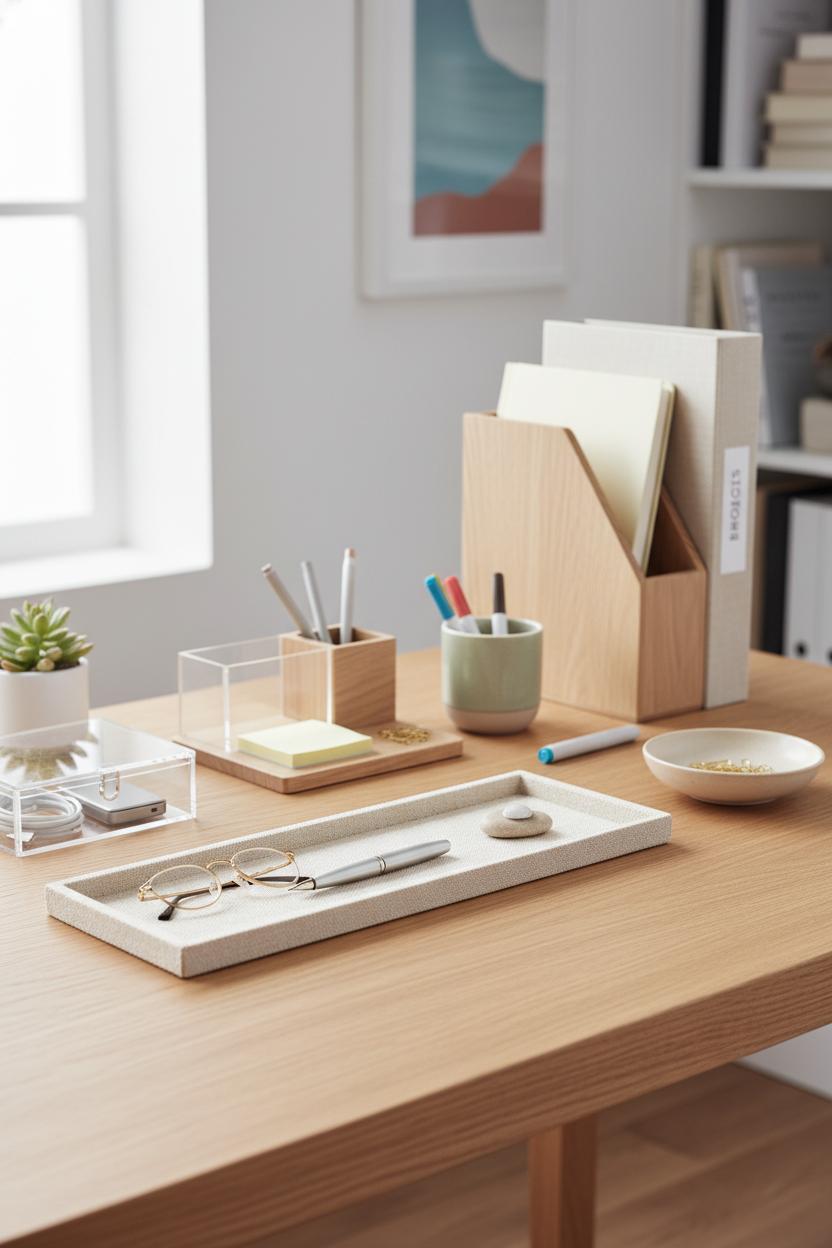
Visual clutter is the background noise of your workday, so the smartest storage starts with giving every little thing a home that feels intentional. Think in zones: a slim tray for everyday essentials, a lidded box for tech bits, a vertical file for papers in motion, and a compact desk organizer for pens and sticky notes. When your home office setup follows a simple palette—wood, linen, clear acrylic—your eyes rest and your brain gets the unspoken cue to focus. Layer in soft desk decor that doubles as storage, like a ceramic cup for markers or a low bowl for clips, so function looks pretty left out. One of my favorite creative workspace ideas is to limit what lives on your surface to what you use daily; everything else gets tucked up, hung up, or pulled out only when needed.
Go vertical to clear space without sacrificing personality. A pegboard wall above your workstation turns awkward air into adaptable storage for scissors, washi, rulers, and cables, while keeping inspiration photos front and center. Add a narrow shelf for notebooks and a small basket for chargers. Inside drawers, use modular inserts to corral cords, sticky tabs, and batteries—no more rummaging. If you’re short on drawers, a rolling cart parked beside a standing desk can hold printers or art supplies, then slide away when you’re done. Clip-on cable catches and a tidy power strip mounted under the desktop keep cords invisible; pair them with a clamp-on task lamp to free even more surface area. Little labels help, but color-coding does the remembering for you.
In a small office design, scale matters: a shallow desktop, a sleek desk organizer, and an ergonomic chair that tucks in cleanly make the room feel bigger and calmer. Try the “one in, one out” rule and a two-tier inbox—today and this week—to keep paper honest. End each day with a two-minute reset so tomorrow starts fresh; tiny productivity tips like that add up. Let one beautiful piece of desk decor hold court—maybe a plant or framed art—so your space feels styled, not crowded. When storage is thoughtful and beautiful, your desk becomes a quiet launchpad for ideas, not a landing pad for clutter.
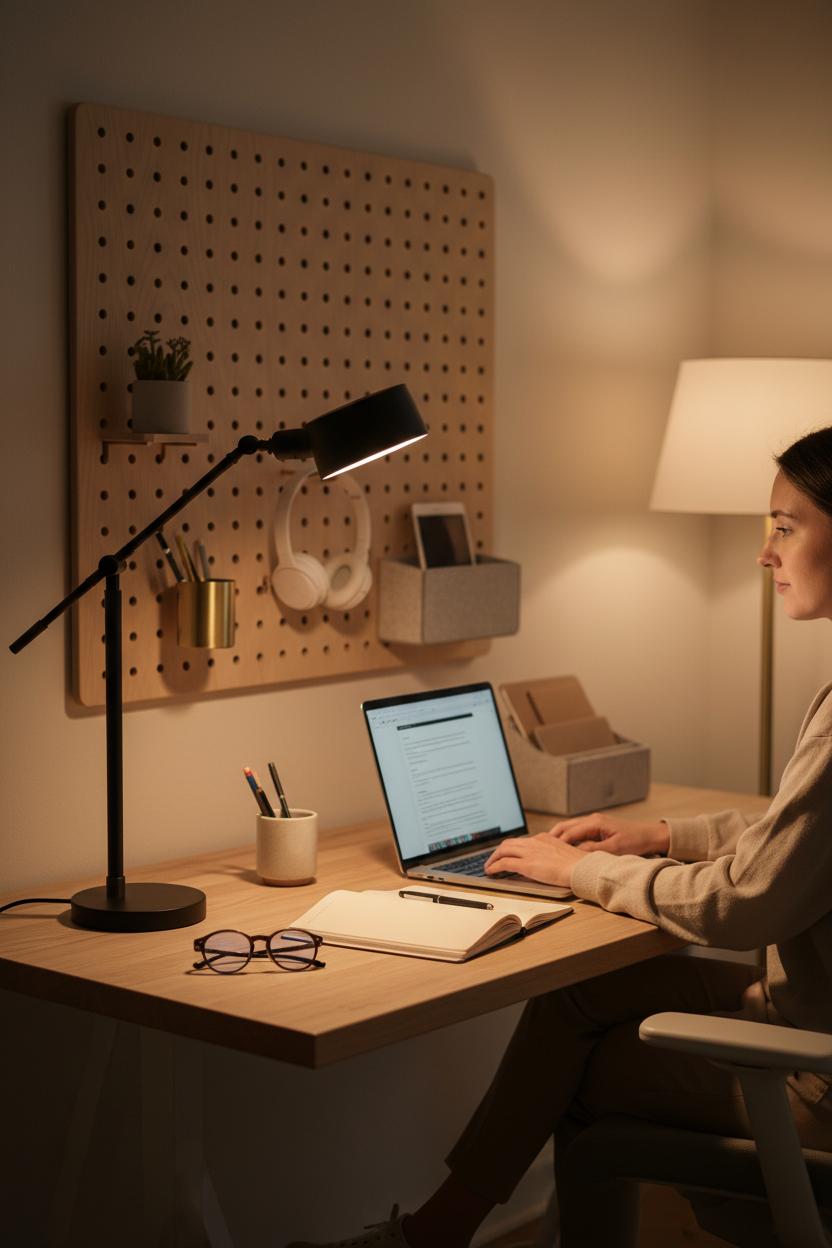
If your brain feels scattered by the end of the workday, start by dialing in the most underrated hero of any home office setup: the task lamp. A focused beam creates a cozy “island of attention” that gently tells your eyes where to land and your thoughts where to go. Look for an adjustable arm and a matte shade that diffuses glare, and choose LEDs around 3500–4000K for crisp focus during the day, then dim down to 2700–3000K in the evening to signal wind-down mode. Place the task lamp on the opposite side of your writing hand to avoid shadows, and aim the head at a 30–45° angle across your work rather than straight down. Bonus points if the bulb has a 90+ CRI so colors look true—handy for sketching, mood boards, or simply reading documents without eye strain.
These little lighting tweaks are the kind of productivity tips that make a big difference, especially in small office design where space is precious. Clamp-on lamps free up surface area, while a slim task lamp tucks neatly behind a monitor to reduce contrast between your screen and surroundings. If you work at a standing desk, choose a lamp with a tall reach so the light follows you up and down; pair it with an ergonomic chair for seated sessions so your posture and lighting are equally supportive. Keep glare in check by turning off harsh overheads and layering soft ambient light with your task lamp. Mount a pegboard wall above your desk to hang cords and pen cups, then slide a compact desk organizer beneath the glow so essentials are always in reach without visual clutter.
Because lighting is also a piece of desk decor, treat your task lamp like jewelry for your workspace—brass for warmth, matte black for modern, linen shades for softness. Create a ritual: lamp on, tabs trimmed, shoulders down, brain engaged. It’s one of those creative workspace ideas that instantly elevates your flow, helping you move from scattered to centered. When your lamp, layout, and tools all “click,” your home office setup stops fighting you and starts feeding you—inviting deep focus, calm eyes, and a little spark of inspiration every time you sit down.
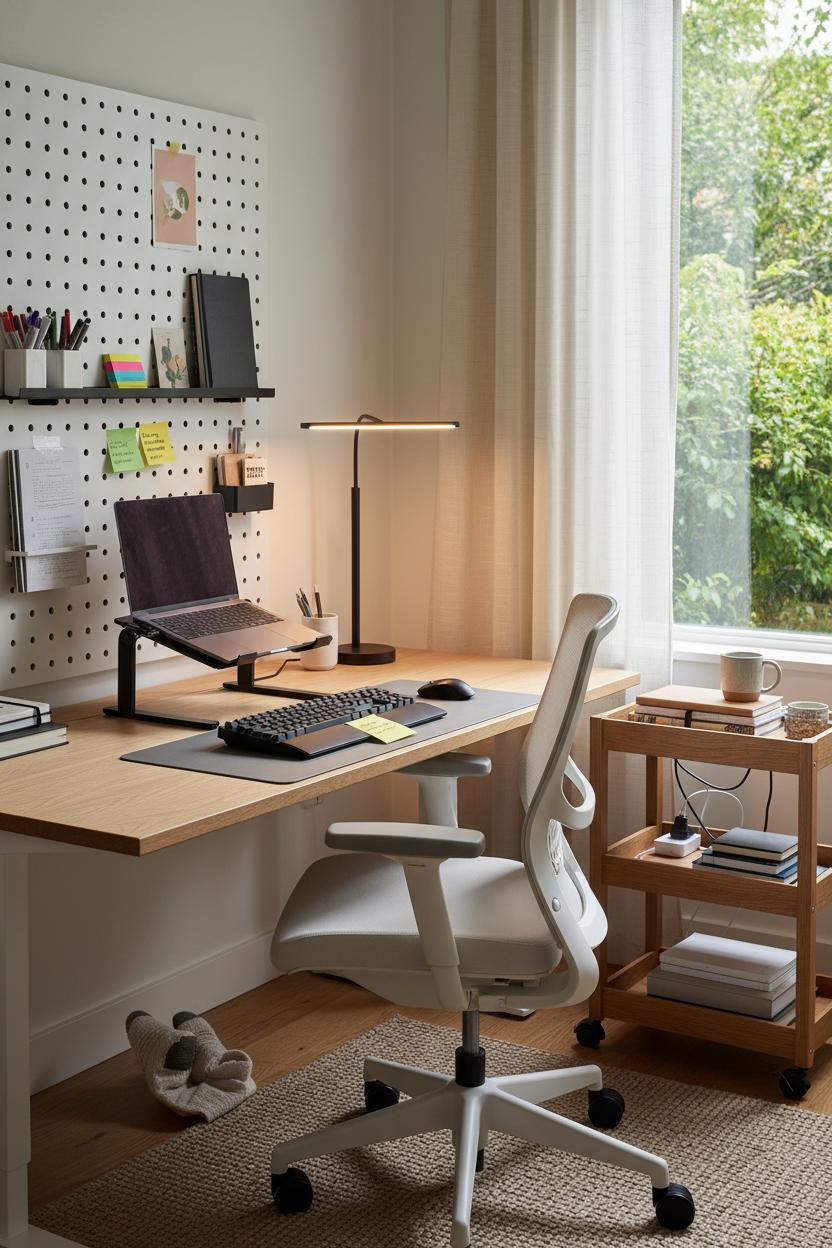
Think of deep work like a room within your room, and build it with gentle boundaries. Zoning is everything: keep your “focus strip” clean and minimal, while your “idea landing pad” and supplies live vertically on a pegboard wall so they’re within reach but not in your sightline. A small office design trick is to use light to draw your attention—click on a warm task lamp that creates a little halo over your keyboard and let the rest stay dim. If your home office setup is tight, a rolling cart or slim desk organizer can corral notebooks, sticky notes, and chargers that would otherwise sprawl. For those who like to move, split your space into sit and stand zones: a standing desk for sprint sessions, an ergonomic chair for drafting and editing. These simple shifts are creative workspace ideas that make your desk decor both beautiful and purposeful.
Rituals are the on-switch. Start by sweeping your surface for two minutes, returning anything stray to your desk organizer; the tiny reset tells your brain it’s time. Then stack cues: turn on your task lamp, cue your deep-focus playlist, pour a fresh drink, and open the exact document you’ll touch first. Keep your desk decor calm—two or three pieces that inspire without inviting fuss—so the visual field stays quiet. Adjust your ergonomic chair, plant your feet, and write one line you can finish in under a minute; momentum beats motivation. These micro habits become baked-in productivity tips that pair beautifully with a thoughtful home office setup.
Breaks keep the groove from fraying. Try 50 minutes on, 10 off—or 25/5 if your day is choppy—and use the off-time for body and light: stand up, raise the standing desk, stretch, and look out a window. Refill water, step outside for a breath, or do a quick restock of pens on the pegboard wall so Future You returns to order. End each session by jotting a one-line “next step” on a sticky and leaving it center stage; it’s a soft landing for your next return. If you share space, a curtain or slim shelf can act as a visual boundary that signals “focus mode,” a small office design flourish that protects attention and keeps those creative workspace ideas flowing.
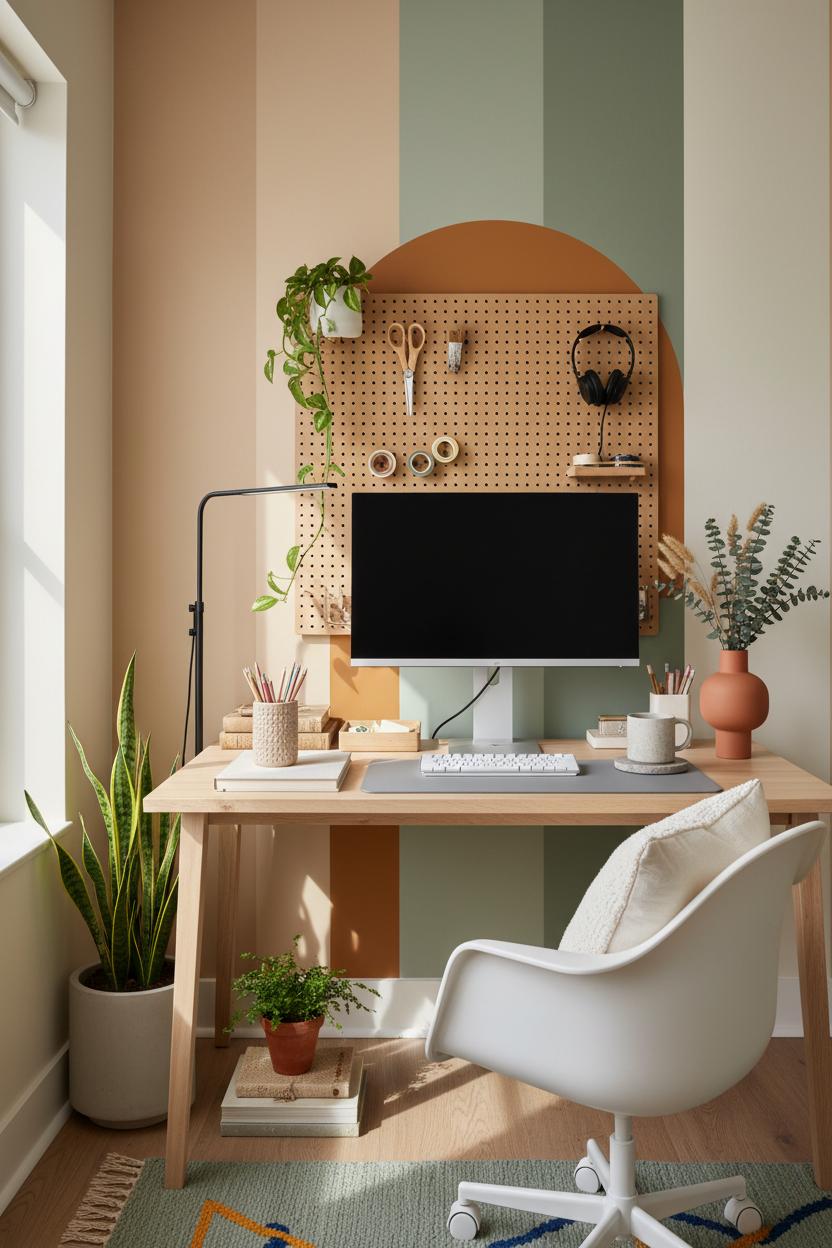
Color wakes up your brain before your coffee does, so start by choosing a palette that feels like a deep breath. Think soft clay, warm sand, and a hint of sage for calm focus, then punctuate with a pop of cobalt or marigold to spark ideas. In a small office design, even a single stripe of color—a painted arch behind your monitor or a swath on a pegboard wall—can define the zone without crowding it. If your home office setup includes a standing desk, let the surface be your mood board: a ceramic pen cup, a linen notebook, a stone coaster, and a matte vase for a few stems. These tactile layers make desk decor feel intentional, not cluttered, while giving your hands and eyes micro-moments of delight.
Plants are the quickest creative workspace idea with a big payoff. A trailing pothos softens the edges of a monitor, a sculptural snake plant frames an ergonomic chair, and a tiny fern beside your keyboard adds that just-watered freshness. If light is limited, try dried grasses or preserved eucalyptus for shape without the upkeep. Elevate pots on stacked books for dimension, or corral minis on a shallow tray so watering day is easy. Pair greenery with a good task lamp in a warm-to-daylight adjustable tone—cool light for heads-down writing, warm light for late-night sketching. Bonus productivity tip: position plants where you naturally glance during breaks to encourage mindful eye rests and reduce screen fatigue.
Texture is the secret ingredient that makes a workspace feel designed rather than improvised. Layer a woven runner under your keyboard, mix a smooth concrete catchall with a ribbed glass jar, and tuck a boucle pillow on your ergonomic chair for cozy support. A slim desk organizer in wood or metal keeps paper clips, sticky notes, and cables in line, while a vertical pegboard wall handles headphones, washi tape, and scissors—prime real estate for small office design that stays flexible. If you rotate between seated and standing, anchor your standing desk with a soft mat and a petite rug to define the area. Refresh often: swap a pillow cover, change out a plant, switch your lamp temperature, or clip new inspo to the wall—tiny edits that keep creativity moving without overhauling your whole space.
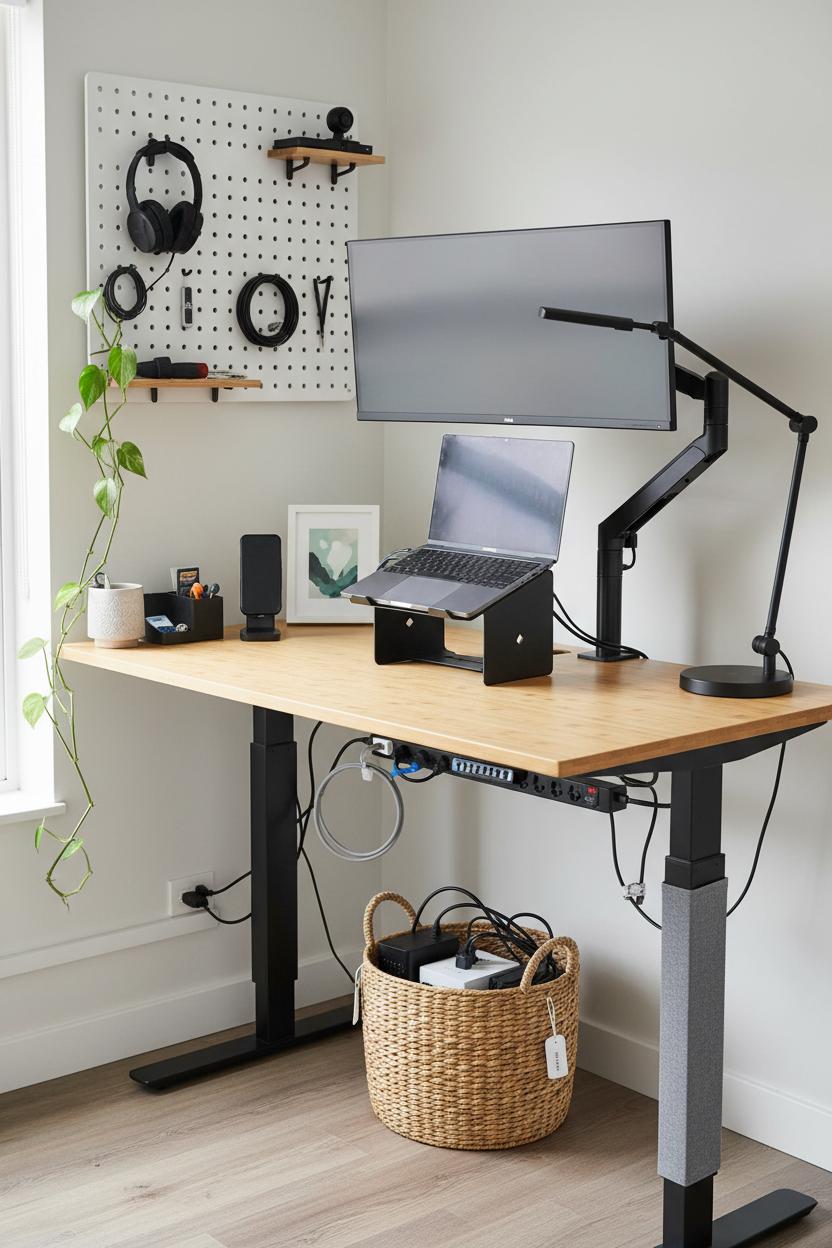
Cables don’t have to tangle your thoughts. Start by giving every cord a home: mount a slim surge protector beneath your desktop and thread cables through a grommet or adhesive clips, then let them travel neatly down a desk leg in a fabric sleeve. If you use a standing desk, leave a gentle loop of slack so nothing tugs when you change heights, and corral the extra length with Velcro ties. Tuck the modem and power strip into a ventilated cable box or woven basket under the desk, and label both ends of each cable so swaps are painless. Create one “charging zone” with a multi-port charger and a petite desk organizer for cords, memory cards, and earbuds—bonus points for a wireless charger that keeps your phone vertical for quick glances. A pegboard wall above the workstation is a small office design secret weapon: hang your headphones, spare cables, and tech tools on hooks, then add a narrow shelf for your webcam or external hard drive so they’re accessible but off the surface. Simplify your desk decor by letting the tech visually recede; a single trailing vine or framed print looks calmer when wires aren’t competing for attention.
Place your gear for how your body moves. Keep daily tools inside your primary reach zone and use a monitor arm or laptop stand to free space for writing. Position your task lamp on the opposite side of your dominant hand to reduce shadows, and slip its cord into the same route as your keyboard and display to keep lines clean. If you roll in an ergonomic chair, make sure wheels won’t snag by running a baseboard raceway along the wall to the nearest outlet. Printers and bulky hubs can live on a low shelf or cabinet, while mics and webcams perch at eye level for video calls. These creative workspace ideas are quiet productivity tips in disguise: fewer visible cords mean fewer visual distractions, and a well-planned home office setup asks less of your brain to find, charge, and adjust. Whether your space is a roomy studio or a corner nook, thoughtful cable management turns chaos into calm—leaving your standing desk clear, your pegboard wall purposeful, and your desk decor delightfully simple.
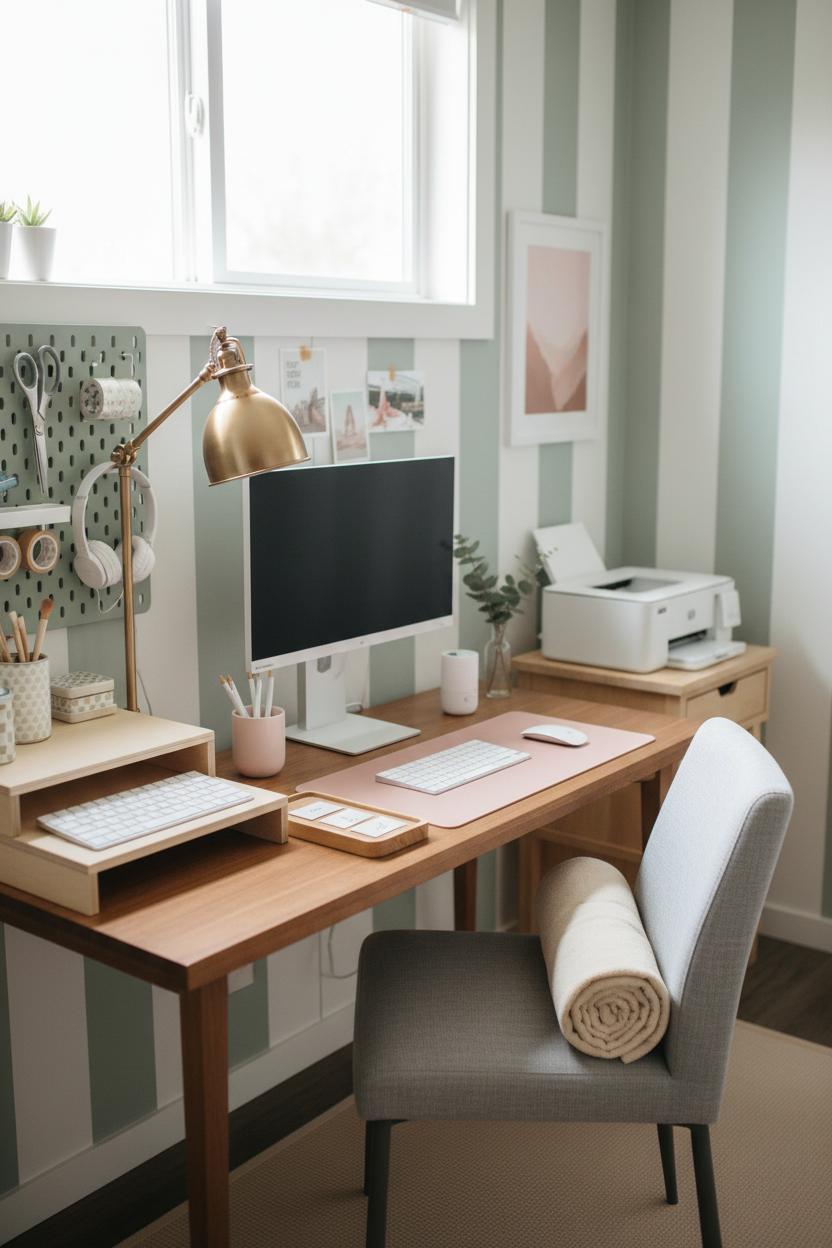
If your space needs a pick‑me‑up and your wallet needs a break, try a weekend refresh that leans on simple, creative workspace ideas with big impact. Start by shopping your home: pull your desk closer to a window, borrow a side table as a printer perch, and corral visual clutter so your eye has room to breathe. A mini “standing desk” is as easy as placing two sturdy shelves or risers on your current surface for stretch‑and‑type sessions, and a borrowed yoga mat works as an anti‑fatigue pad. Choose one accent color for cohesive desk decor—think a blush mouse pad, matching pen cup, and a framed art print—and let the rest stay neutral. Peel‑and‑stick wallpaper or a painted stripe behind your desk instantly defines your home office setup without a full room makeover, a smart move for small office design.
Go vertical to gain square footage. A DIY pegboard wall from the hardware store (paint it a soft sage or charcoal) turns empty air into storage for scissors, washi, headphones, and a tiny plant. Pair it with a simple desk organizer made from saved jars and cans wrapped in pretty paper—free, pretty, and functional. Swap harsh overheads for a warm task lamp placed at 10 o’clock to your keyboard to reduce glare and eye strain; lighting tweaks are tiny productivity tips that pay off daily. If your chair is so‑so, add a rolled towel for lumbar support or a budget cushion while you price out an ergonomic chair upgrade later.
Layer in small delights that nudge you back to the work you want to do. A tray for a three‑item to‑do stack, a timer for focus sprints, and a petite vase with grocery‑store greens keep your space feeling intentional. Rotate a mini gallery of printables or postcards above your monitor for instant inspiration. When you’re done each day, return pens, recycle notes, and clear your surface in one minute—it’s the simplest routine to protect your newly refreshed nook. With a few thoughtful touches—a pegboard wall, a streamlined desk organizer, a supportive ergonomic chair, a flexible standing desk moment, and a glow‑y task lamp—you’ll have a home office setup that looks curated, supports your flow, and proves great design doesn’t need a big budget.
From lighting layers and mood boards to greenery, storage, and mindful tech, these creative workspace ideas turn any nook into a focus-friendly haven. Whether you’re refining a home office setup or refreshing desk decor, start small: clear the surface, add a calming color, and set a daily ritual. Try zones for deep work and dreaming, lean into vertical space for small office design, and let natural light lead. With these productivity tips, your desk becomes a cozy canvas—made for flow, ideas, and you. Brew something warm, cue your playlist, and create your corner of calm today.