Physical Address
304 North Cardinal St.
Dorchester Center, MA 02124
Physical Address
304 North Cardinal St.
Dorchester Center, MA 02124

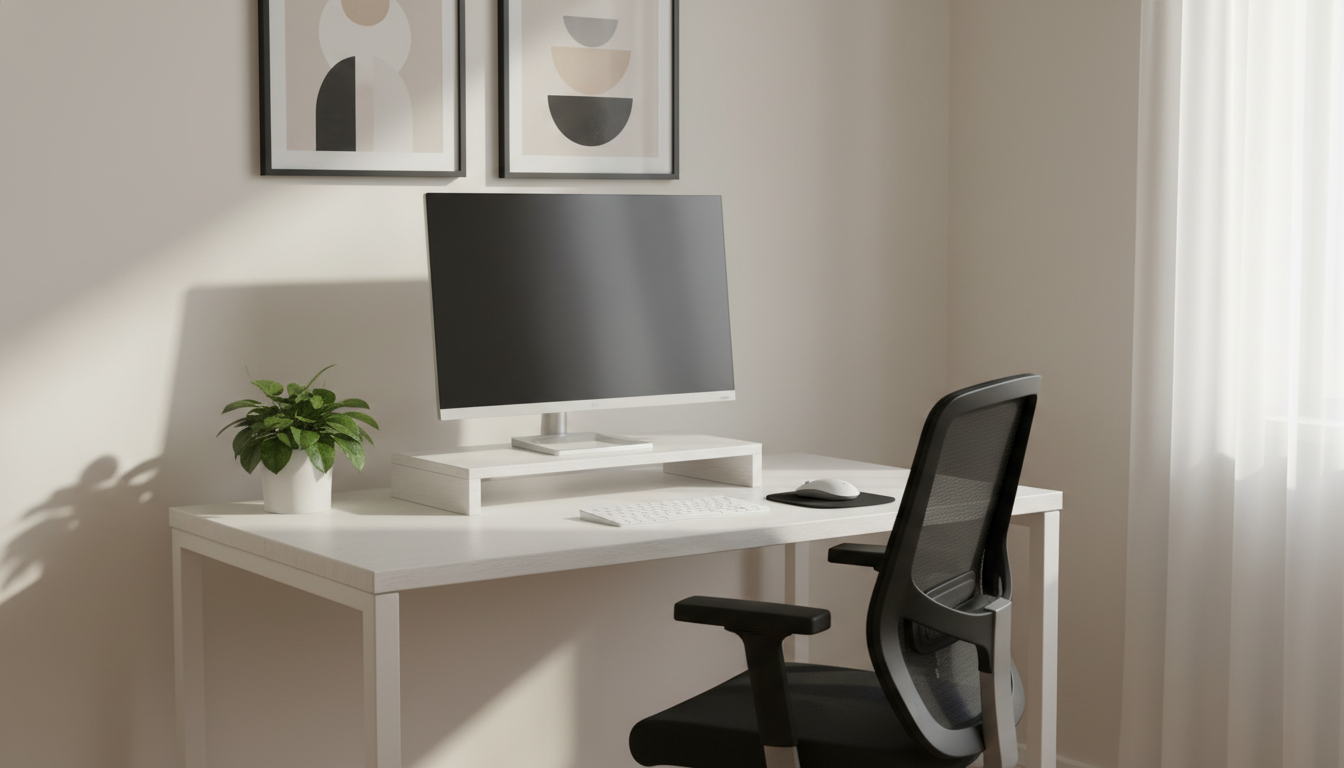
Craving calm to power your deep work? This serene minimalist workspace guide blends smart home office ideas and small office design for a distraction-free desk setup. Learn how a standing desk and ergonomic chair align posture, a monitor riser and desk mat streamline comfort, and a cable management box keeps cords invisible. Discover texture, light, and layout tweaks plus bite-size productivity tips that turn any corner into a focused haven. Pin now, personalize later—your clearest thinking starts here.
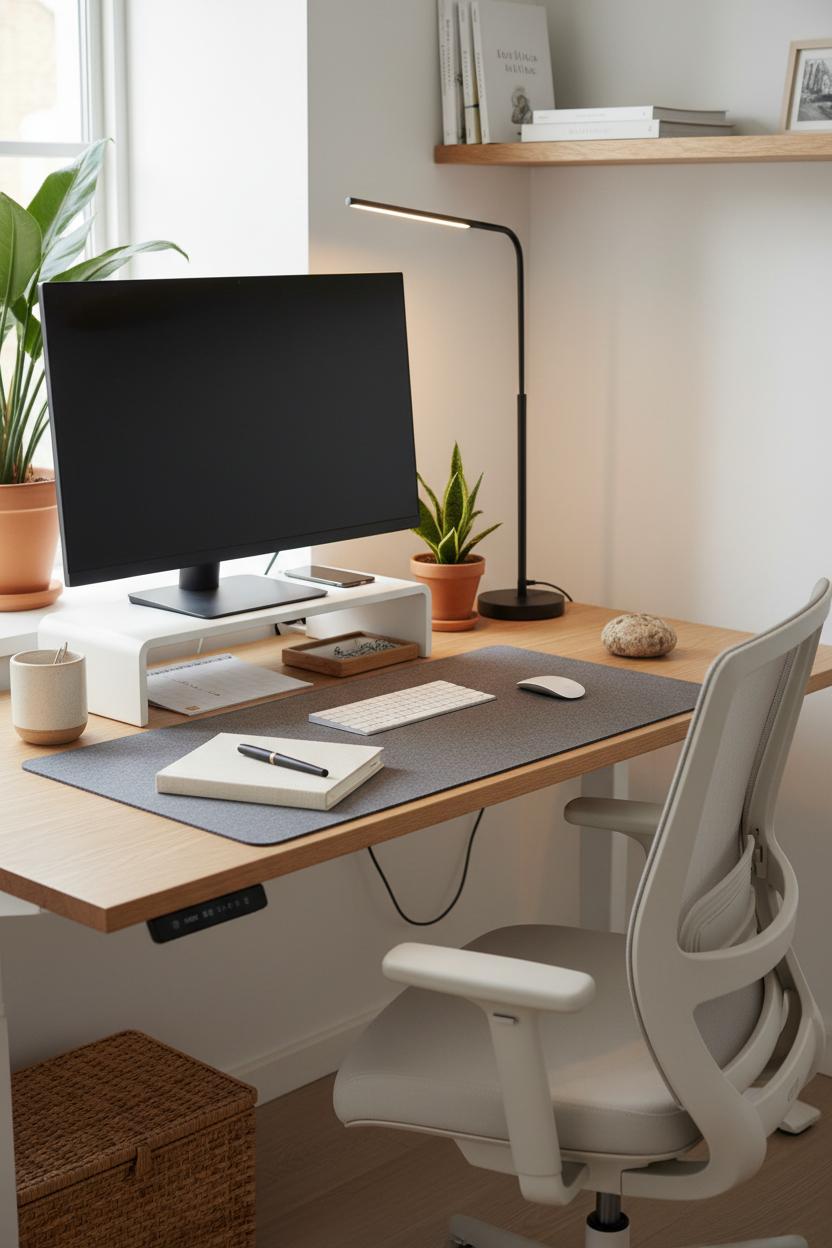
Begin with a soothing foundation and let every choice earn its spot on the surface. Choose a light, neutral palette—think soft white with warm wood or stone—and build your desk setup around one tactile anchor, like a leather or felt desk mat that corrals your keyboard and notebook and instantly looks intentional. If you can, opt for a sleek standing desk to shift between sitting and standing throughout the day; pair it with a supportive ergonomic chair so posture never competes with focus. Keep the tech elevated and airy with a simple monitor riser that brings your screen to eye level and frees space beneath for a planner or tray. In a minimalist workspace, fewer objects with better function always feel more luxurious, so let a single beautiful pen, a lidded ceramic cup for clips, and a small plant be the quiet details that make the space feel alive without visual noise.
To keep calm from the cords up, hide the spaghetti with a cable management box under the desktop and run slim clips along the back edge so everything disappears from sight. Dedicate one spot to charging—a compact hub tucked behind the monitor—and keep just the essentials within an arm’s reach. For small office design, think vertical: a floating shelf above the desk for the items you reference daily, and a low, closed bin for the things you don’t. Lighting matters more than you’d expect; a slender lamp with a warm bulb softens screen glare and adds a gentle evening glow. If you need a mood boost, bring in one textured piece—a woven basket, a stone paperweight—to add warmth without clutter. Before you buy anything, imagine the surface cleared; if a new item doesn’t have a job, it doesn’t get an invitation.
A few gentle productivity tips tie it all together. Keep one notebook in play and archive the rest, set a two-minute end-of-day reset to clear the desktop edges, and start mornings by opening only the tab you need for your first task. Let your environment cue your focus: sit, breathe, and begin—your calm, clutter-free corner is doing the quiet work alongside you.
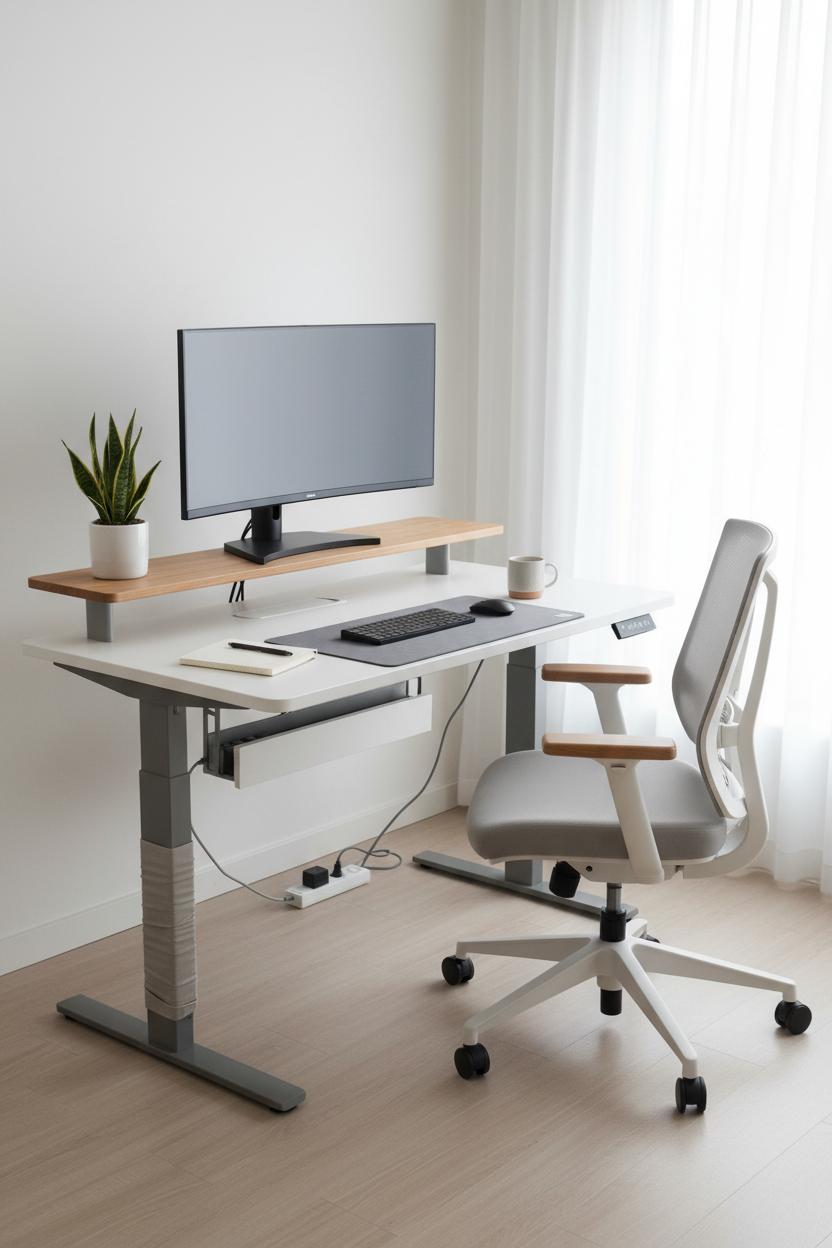
A standing desk is the quiet hero of a minimalist workspace, so start by choosing one that feels visually calm and physically solid. Look for clean lines, a matte neutral finish, and a desktop depth that’s at least 24 inches so your keyboard isn’t crowding your screen. If you’re working with small office design, consider a compact 40–48 inch width and measure your walking path so you can glide around without bumping corners. Stability is everything—seek a steel frame, a weight capacity that far exceeds your gear, and a quiet motor with programmable presets so you can shift from sitting to standing without breaking your train of thought. These choices aren’t just home office ideas; they’re productivity tips in disguise. A smooth transition keeps momentum, a soft edge keeps wrists happy, and a clutter-free surface keeps your mind focused on one thing at a time.
Keep accessories intentional. If your monitor sits a bit low, a simple monitor riser can lift your gaze without adding visual noise. A slim desk mat anchors your essentials and adds a gentle texture that photographs beautifully while protecting the surface. Hide the power strip and bundles of wires in a cable management box and route everything down a single leg so the silhouette stays airy. Pair your desk with an ergonomic chair that has supportive lumbar and a minimal profile—you’ll sit better and switch positions more often. For the actual desk setup, stick to a consistent color palette—think warm oak with soft white and graphite—to make screens, notebooks, and plants read as one serene composition. Program two or three heights, keep only daily-use tools on top, and tuck backups into a single drawer. When every element earns its place, your standing desk becomes a calm command center that supports deep focus, not another surface to manage. This is the heart of a minimalist workspace: fewer decisions, fewer distractions, and a gentle rhythm that carries you from task to task with ease.
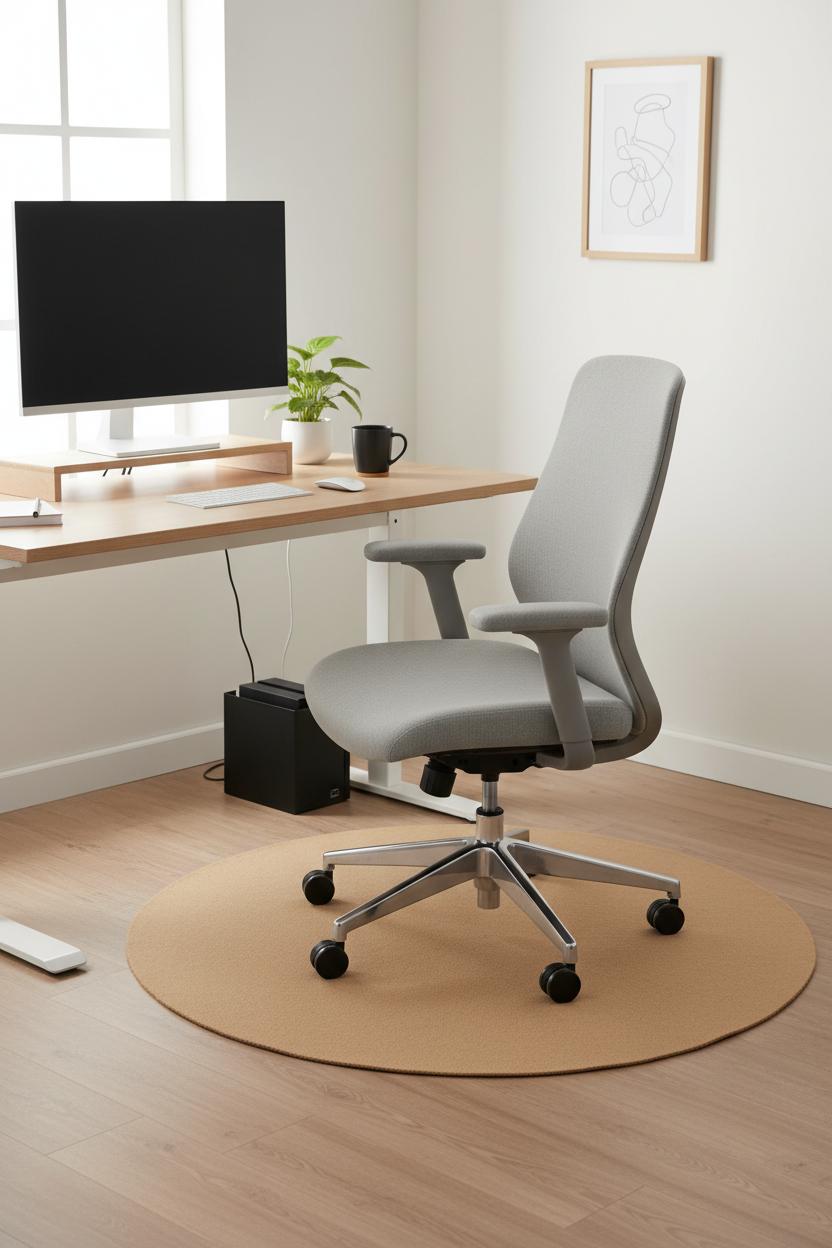
In a serene minimalist workspace, the ergonomic chair is the quiet hero that keeps your posture aligned and your mind clear. Look for a chair that cradles the natural curve of your lower back and lets you plant your feet flat, with hips slightly above knees for effortless breathing and calm focus. Adjustable armrests that meet your elbows at a soft 90 degrees reduce shoulder tension, while a seat with gentle waterfall edges helps circulation during long sessions. I love fabrics that are breathable and neutral—think soft gray or warm sand—to blend into a pared-back palette without visual noise. Slide your hips deep into the backrest, let your ribcage float tall, and imagine the crown of your head growing upward; the body organizes itself when the support is right. It’s a small shift with big results for concentration.
Your chair works best as part of a thoughtful desk setup. Pair it with a standing desk to alternate positions throughout the day, so your spine never feels locked in. Keep your screen at eye level with a simple monitor riser to avoid the dreaded forward crane. A low-profile desk mat anchors the chair’s wheels, defines your work zone, and adds a soft landing for your feet. Tuck cords into a cable management box so nothing catches on casters or distracts your eye; clean lines equal a quieter brain. In small office design, choose a chair with a slim silhouette and quiet mechanisms—no squeaks—so form and function feel seamless. This is where home office ideas meet everyday comfort: refine the essentials, edit the extras, and let each piece earn its place.
A few gentle productivity tips make the setup sing. Set tiny posture reminders—stand for five minutes each hour, roll your shoulders back, and reset your gaze across the room. Keep the seat height where you can glide the chair without hunching, and cue focus with one intentional breath every time you sit. When your ergonomic chair supports you without demanding attention, your workspace softens, your body settles, and deep focus becomes the default rhythm of your day.
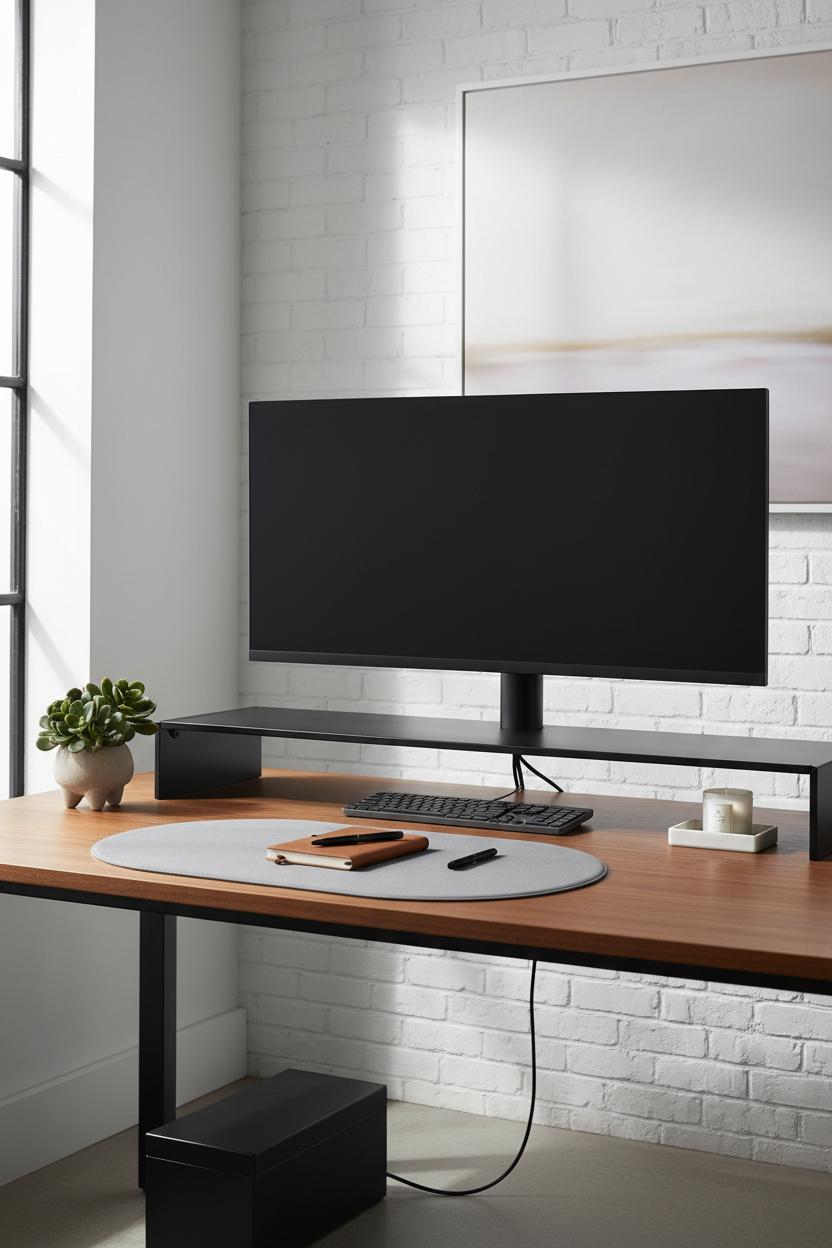
A slim monitor riser is the quiet hero of a minimalist workspace: it lifts your screen to eye level, melts into the background, and frees the desktop without the visual weight of a clunky arm. When your screen meets your gaze, your neck lengthens, your shoulders soften, and your breathing settles—tiny posture wins that add up to deeper focus. In a small office design, that extra shelf of space beneath the monitor is gold. Slide your keyboard, notebook, or a slim tray under it between tasks and your desk suddenly looks twice as roomy. Choose a riser that echoes your style—pale wood for warmth, clear acrylic for a barely‑there vibe, or matte black steel for a quiet, architectural line—and notice how the whole desk setup feels lighter and more intentional than the old “stack of books” trick.
For comfort that lasts, aim to keep the top third of your display at or just below eye height while seated in your ergonomic chair, and let your elbows relax at a natural angle to the keys. If you use a standing desk, a monitor riser helps maintain consistent sightlines as you switch positions, so you aren’t craning during standing sessions. Pair it with a soft-edged desk mat to visually anchor the zone and give your wrists a pleasant landing. Tuck cables behind the riser and route them into a cable management box on the floor or the back edge of the desk; the fewer stray lines you see, the more your brain reads “clear.” These are tiny productivity tips that compound throughout the day—less fidgeting, fewer micro-adjustments, more of your attention pointed at the work that matters.
Styling it is simple: one plant or a small candle beside the base, a pen and notepad stowed underneath, nothing extra. In the universe of home office ideas, a monitor riser is one of those small, affordable changes that immediately elevates the room and your routine. Eye-level screens without the bulk keep your visual field calm, your posture supported, and your workspace spacious—an easy win for a serene, distraction-free desk setup.
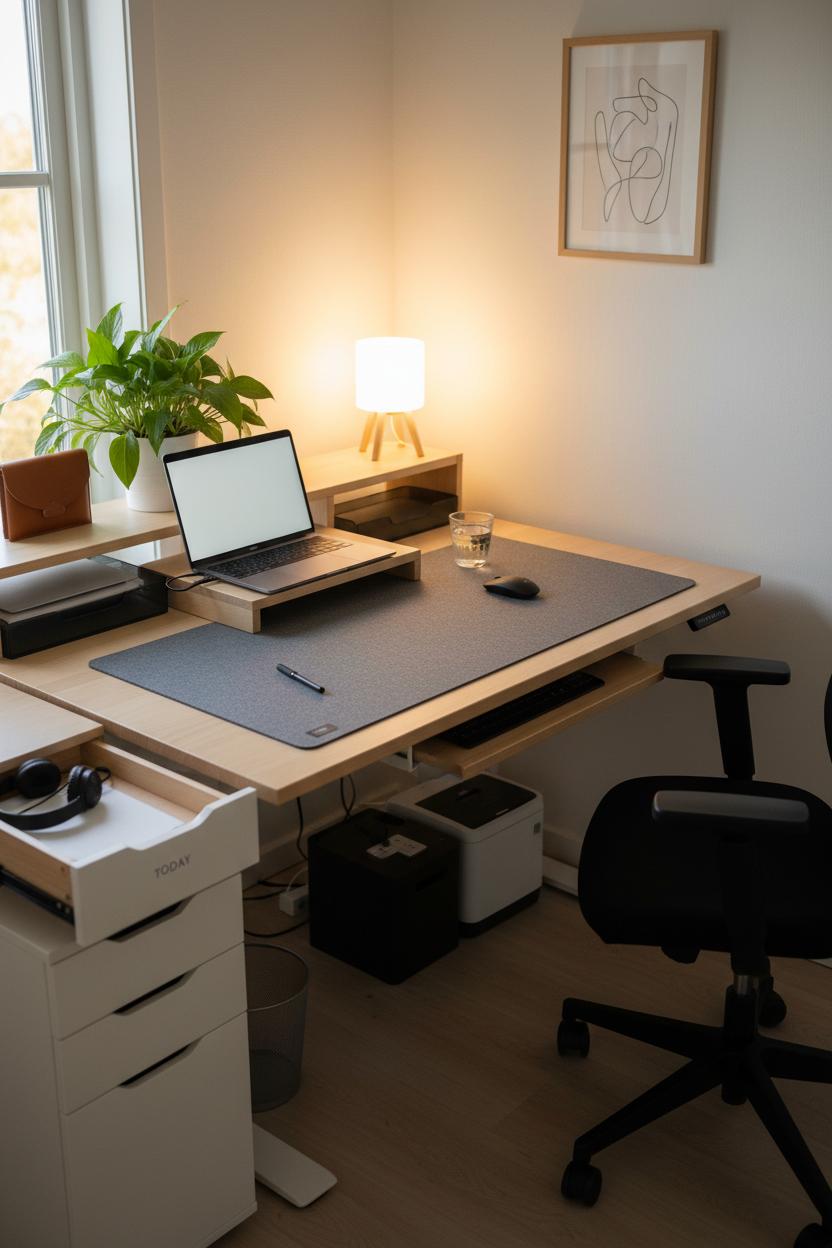
Think of your daily reset as the cozy bookend to your workday—a small, soothing ritual that keeps your minimalist workspace light and breathable. Set a five-minute timer, cue a favorite playlist, and return everything to its “home.” Keep only three essentials visible on your desk setup—laptop, pen, glass of water—while the rest earns a tucked-away spot. A desk mat doubles as a boundary so clutter can’t creep; when you’re done, slide your keyboard and mouse neatly onto it or under a monitor riser to clear your sightline. Corral cords in a cable management box so the surface stays clean and your brain isn’t tracking tangles. If you love movement, a standing desk makes it natural to reset as you transition between tasks, while an ergonomic chair that tucks under the desktop visually “closes” the office at night. Small office design thrives on vertical and hidden storage, so keep a slim tray or drawer for “Today” papers and a separate drawer for “Later,” then treat your wastebasket and shredder like a quick, end-of-day cleanse. These tiny habits are the quiet heroes of tidy home office ideas.
Systems stick when they’re frictionless. Give every tool a parking spot and make it easy to put away in two seconds flat—charger in the charging pouch, headphones in the top-left drawer, notepad centered on the desk mat. Use the one-minute rule: if it takes less than a minute to file or toss, do it now. Digitally, aim for a zero-icon desktop and one clean downloads folder; wrap up with a simple checklist—clear surface, water plants, power down, lights off. Batch micro-maintenance once a week: wipe the monitor, refresh sticky notes, restock pens, and trim any extras that wandered in. For a calmer visual palette, group like items by material—wood, linen, matte black—so your desk setup looks intentional even when in use. A monitor riser lets you slide notebooks underneath; a cable management box hides the power strip; the ergonomic chair and standing desk support your body so your mind can stay clear. The best productivity tips aren’t flashy—they’re repeatable. Protect your focus by resetting daily, and your workspace will greet you each morning as a serene, minimalist workspace that’s ready for deep work.
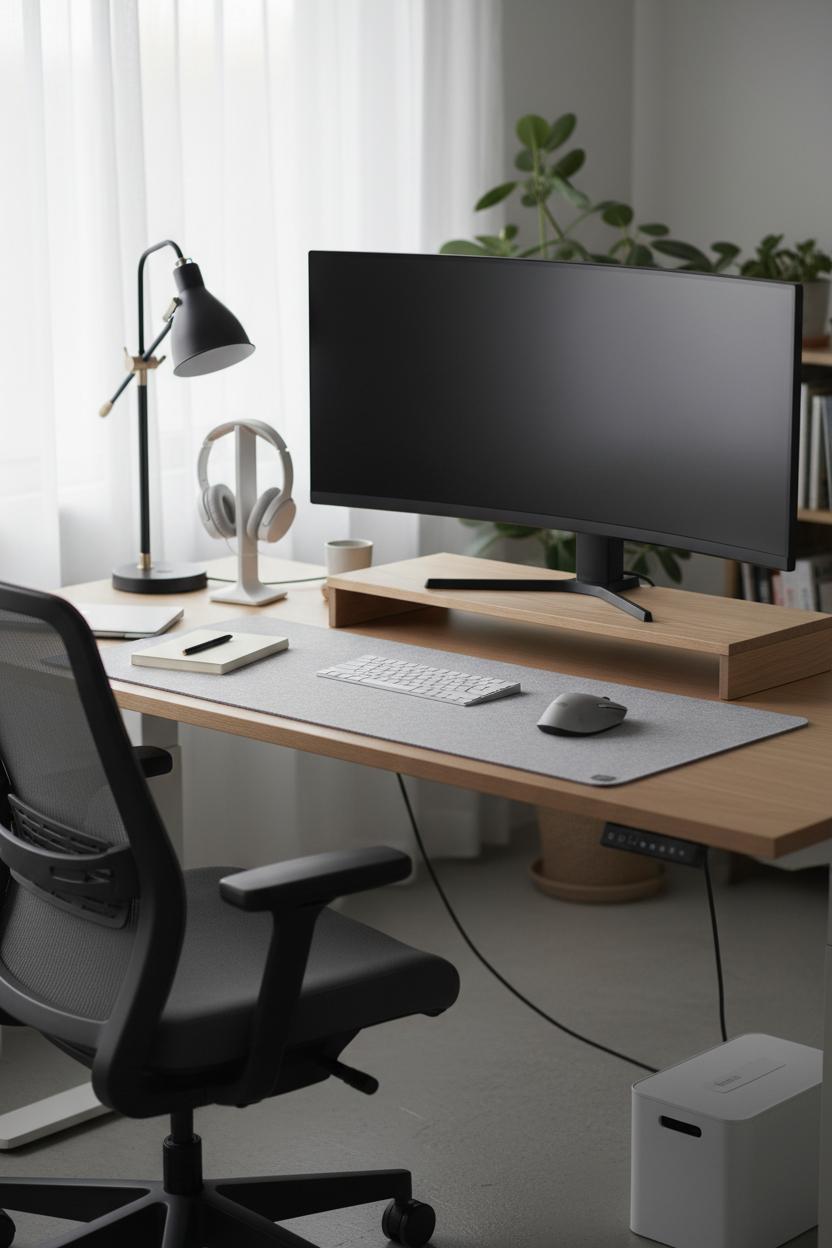
When it comes to tech, less truly is more. Start with a calm, unified desk setup anchored by one beautiful essential: a crisp display elevated on a simple monitor riser so your gaze rests naturally and your shoulders soften. Let a slim wireless keyboard and quiet mouse glide over a soft desk mat that doubles as a visual boundary for work. Hide the visual noise with a cable management box that tucks away power bricks and cords, leaving only clean lines and a sense of breathing room. If you have the space, a standing desk brings gentle movement into your day, while an ergonomic chair keeps posture effortless and supported. These pared-back choices turn a minimalist workspace into a sanctuary—especially helpful in small office design where every object needs to earn its place.
Choose tech that fades into the background so your mind can step forward. A single high-quality monitor instead of two, a warm task lamp, and noise-canceling headphones can become a quiet trio that keeps you focused without fuss. Keep a dedicated charging dock for your phone out of your direct sightline; better yet, set it to Do Not Disturb during deep work. Corral only what you reach for daily—laptop, notebook, pen—so the surface stays open and inviting. Consider materials that feel good to the touch: matte finishes, soft textiles, light woods. They photograph beautifully for inspiration boards and bring that Pinterest-style serenity to real life. For easy home office ideas that actually stick, give every item a job and a home, then close each work session with a 60-second reset—wipe the desk mat, coil cords into the cable management box, hang headphones, and clear the cup. Simple rituals are powerful productivity tips because they signal your brain it’s safe to focus tomorrow. With fewer, better tools, your workspace becomes a gentle cue to breathe, settle, and do one thing at a time—proof that a mindful collection of essentials will always outperform a crowded drawer of maybes.
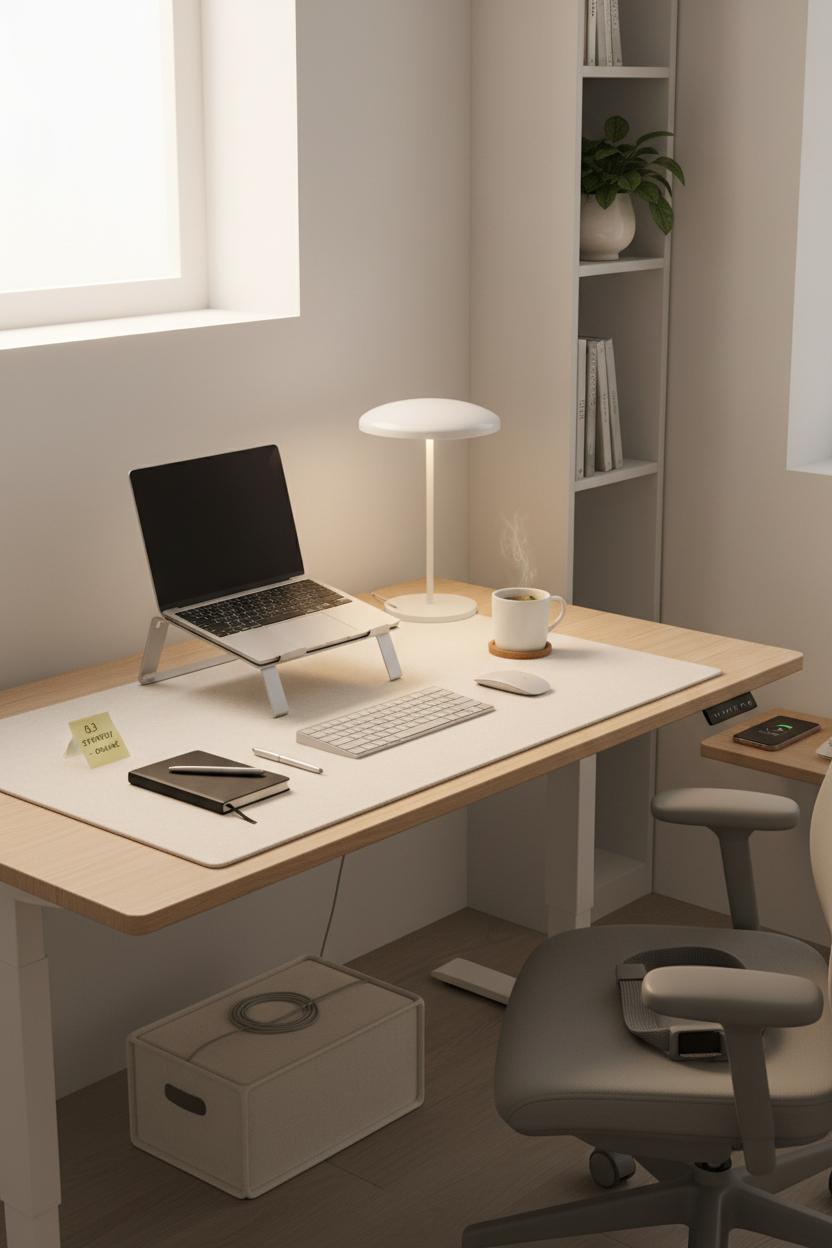
Deep work loves clarity, and in a minimalist workspace that means giving your attention one beautiful landing place at a time. Start each session with a tiny ritual: clear the surface, set your intention on a sticky note, and place only the tool you need on your desk mat so your eyes don’t wander. Keep a capture notebook for stray thoughts so your main task stays center stage. If you’re browsing home office ideas, think in terms of cues and boundaries—lighting a soft lamp, pressing play on a focus playlist, and switching your phone to Do Not Disturb are simple productivity tips that signal “deep focus mode” without adding visual clutter. The magic is in repeating the ritual until your brain associates your clean desk setup with immediate concentration.
Comfort and posture quietly decide how long you can stay in flow. A standing desk lets you alternate between sit and stand to keep energy steady, while an ergonomic chair supports you when the work stretches on. Lift your screen to eye level with a monitor riser and you’ll feel your shoulders drop within minutes. Tuck cords into a cable management box so the view in your periphery stays calm—visual silence is underrated. If you’re working with small office design constraints, go vertical: slim shelves for essentials, a single tray for papers, and a neutral desk mat that defines your work zone without competing for attention. These subtle home office ideas reduce decision fatigue so your creativity can take the lead.
Guard your focus like a scarce resource. Time-block a single, high-impact task, then work in steady sprints—50 minutes on, 10 off, or a 90-minute arc if you’re in the flow. Breaks are part of the system: stretch, sip water, step away from the screen, and let your mind reset. Keep your digital world as minimal as your physical one: close extra tabs, pin only mission-critical apps, and batch notifications. End each day with a two-minute reset—return tools, straighten the desk mat, and jot tomorrow’s first action. These small, gentle productivity tips compound, turning your minimalist workspace and thoughtful desk setup into a reliable, serene engine for deep work.
With a serene minimalist workspace, you’ve cleared noise, honored essentials, and invited calm focus. Keep surfaces clean, let light and greenery breathe, and choose a desk setup that fits your flow and posture. Use hidden storage and soft textures for cozy clarity, whether you’re curating home office ideas or refining small office design. Protect your attention with gentle routines—single-tasking, scheduled breaks, and a nightly reset—simple productivity tips that stick. Brew something warm, light a candle, and return tomorrow to a space that quietly supports your best work.